How to Reduce Condo Liability with Trained Security Guards in North York
Property managers in North York face escalating insurance premiums and legal liabilities from older high-rises. Learn how trained security guards mitigate risks through incident reporting, parking enforcement, and fire safety protocols to protect your condo board.
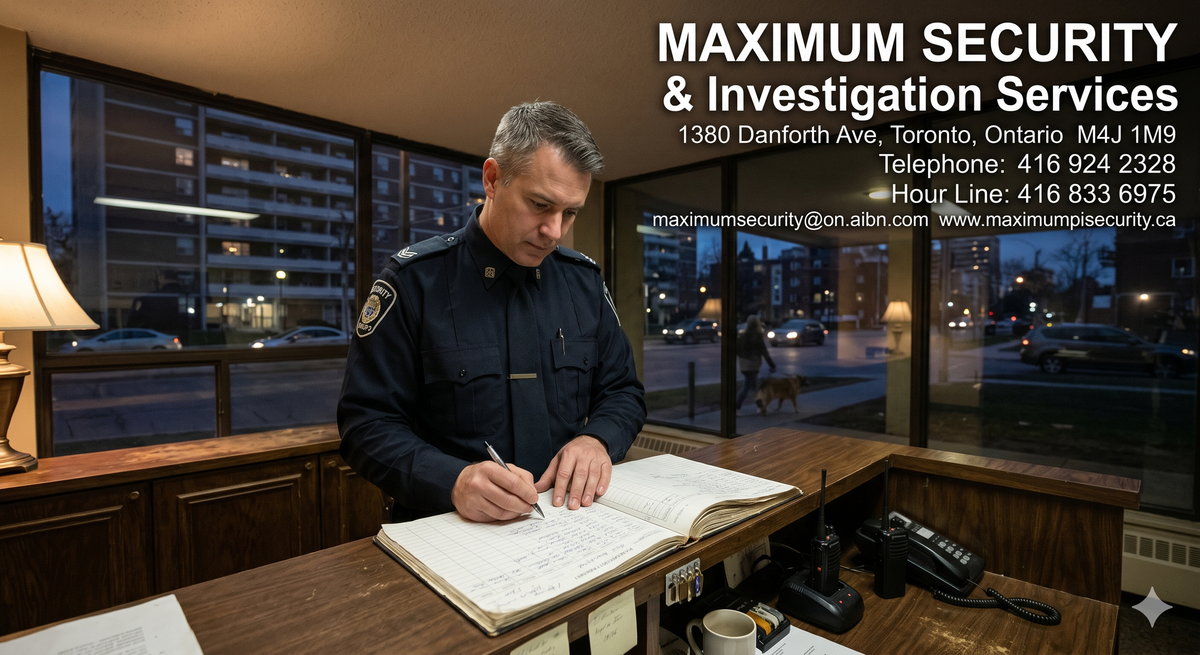
Escalating Insurance Liabilities in North York Condominiums
Older high-rise complexes along the Don Mills and Sheppard Avenue corridors are becoming massive liability traps for North York condo boards. The combination of aging infrastructure, unauthorized underground parking access, and outdated fire safety protocols has created an environment where a single unrecorded incident can result in millions of dollars in insurance claims. Relying on passive surveillance cameras or untrained administrative staff leaves property managers entirely exposed when a flood, fire, or trespassing incident occurs.
The cost of commercial property insurance in the Greater Toronto Area has skyrocketed, and underwriters are actively penalizing buildings that lack proactive, documented risk management. Establishing a robust defense requires more than just installing new locks; it demands professional personnel trained in exact provincial standards. For a complete understanding of structural protection, reviewing the Condominium Concierge Security Management: The GTA Board Guide is critical for modern operations.
Condominium boards in North York—particularly those managing properties built before 2000 near Fairview Mall or along the Yonge and Finch strip—are facing unprecedented scrutiny from insurance providers. The core issue is negligence. If a resident slips in a wet lobby, or if an unauthorized individual gains access and causes property damage, the condo corporation is immediately targeted for legal action. Without a trained security guard on site to log the hazard, secure the area, and document the resolution in real-time, the board has no verifiable defense against the claim.
Incident Reporting as Your Primary Legal Defense
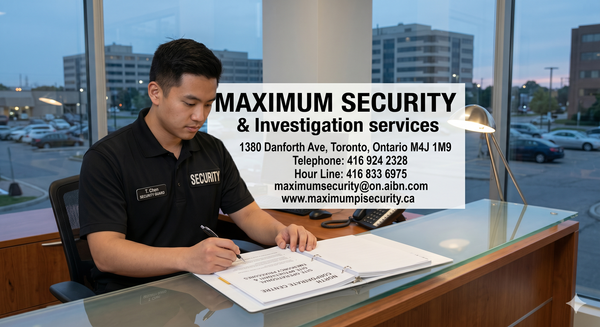
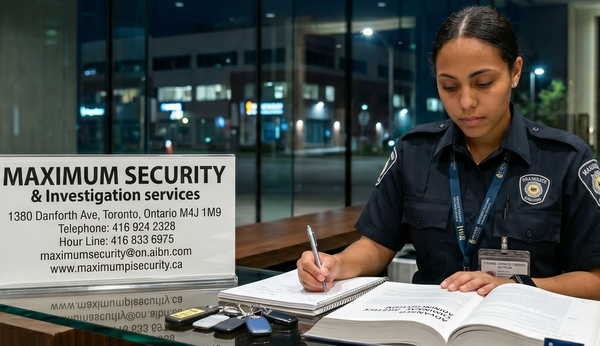
The foundation of liability reduction is the incident report. Security guards are not just physical deterrents; they are active risk documentarians. Every hazard identified, from a malfunctioning garage door to a burned-out lightbulb in a stairwell, must be immediately recorded and timestamped.
The Consensus Verdict: Field data consistently reveals that utilizing paper logbooks for incident reporting results in a 40% higher rate of lost documentation during legal discovery compared to cloud-based systems. Deploy guards equipped with digital, timestamped reporting software, and strictly avoid relying on easily misplaced paper binders for your primary legal defense.
Fire Safety and Active Monitoring in Aging Infrastructure
Fire panels in older high-rises are notorious for triggering false alarms or failing to properly isolate zones. When a panel shows a fault, passive monitoring stations simply dispatch the Toronto Fire Services. This results in heavy municipal fines for false dispatches. A trained on-site guard provides an immediate physical investigation. They conduct floor sweeps, verify the threat level, and manage the evacuation process if a legitimate fire is detected. Under the Ontario Ministry of the Solicitor General guidelines, having trained personnel manage these localized emergencies prevents catastrophic property damage and massive municipal penalties.
Parking Enforcement and Trespassing Control
Unauthorized parking in underground garages creates severe security vulnerabilities. Non-residents tailgating behind authorized vehicles can lead to break-ins, vandalism, and personal safety threats to residents in dimly lit areas. Guards trained in local enforcement identify unauthorized vehicles, issue recognized warnings, and coordinate with licensed towing companies in accordance with Toronto Police Service guidelines. By controlling the subterranean perimeter, you drastically reduce the risk of criminal activity and the associated liability.
For more granular details on controlling vehicle spaces, reviewing the Condo Parking Enforcement Security Guards in Mississauga: Guide provides excellent comparative data on proper subterranean access control.
Estimated 2026 Condominium Guard Coverage Tiers in CAD
| Guard Classification | Function and Deployment | Estimated Hourly Bill Rate (CAD) | Liability Mitigation Focus |
| Basic Concierge | Access control, package logging, lobby presence | $24.00 - $28.00 | Front desk slip-and-fall monitoring, resident disputes |
| Tactical / Enforcement | Active floor sweeps, parking control, trespassing | $28.00 - $34.00 | Criminal deterrence, municipal bylaw enforcement |
| Fire Watch Specialist | Continuous panel monitoring, physical floor checks | $30.00 - $36.00 | High-rise structural protection, alarm verification |
The Financial Impact of Untrained Front Desk Staff
Assigning security responsibilities to standard administrative or building maintenance staff is a direct path to higher premiums. Untrained personnel do not possess the necessary provincial licensing to legally deter trespassers, nor do they understand the strict compliance requirements for maintaining an unbroken chain of custody on incident evidence. By comparing the cost of a catastrophic lawsuit against the operational budget required for a 24/7 trained professional, as outlined in the Cost Breakdown of 24/7 Concierge Services for Scarborough Condominiums, property managers realize that professional guarding is a revenue-saving measure, not an expense.
Advanced Liability Mitigation and Specialized Guard Protocols in North York High-Rises
Defending Against Slip and Fall Lawsuits in Condo Common Areas
The most frequent and costly claims filed against condo boards in Ontario are slip and fall lawsuits. During a typical Toronto winter, snow and slush are constantly tracked into the main lobby. If a resident falls, the immediate legal question is whether the board took "reasonable steps" to prevent the hazard. A licensed guard conducting scheduled, documented lobby sweeps provides the exact legal defense required. By noting the time a hazard was identified, deploying wet floor signage, and logging the time the cleaning staff removed the hazard, the guard neutralizes the negligence claim entirely.
Older Condo Building Liability Insurance Management
For buildings constructed in the 1980s and 1990s around Bathurst and Steeles, insurance companies are demanding higher premiums due to the increased probability of mechanical failures, such as burst pipes or electrical faults. Professional guards conduct systematic mechanical room checks during their overnight roving site checks. Catching a minor water leak at 3:00 AM before it floods four floors of residential units saves the board hundreds of thousands of dollars in water damage restoration and prevents insurance policies from being canceled or heavily penalized upon renewal.
Legal Responsibility for Unauthorized Parking and Vehicle Damage
When a resident's vehicle is burglarized in an allegedly secure underground lot, they frequently hold the condo board responsible for failing to maintain a safe environment. The deployment of a dedicated parking enforcement guard is essential. This individual physically audits the garage, checks for valid parking permits, and ensures that the overhead access doors fully close after each entry. Preventing tailgating is the primary method of stopping organized theft rings that target high-density residential parking structures.
Fire Watch Guard Requirements for Older High-Rises in the GTA
When a building's primary fire alarm or sprinkler system undergoes maintenance, or fails entirely, the building cannot be legally occupied unless a strict "fire watch" is implemented. The Toronto Fire Services mandate continuous, documented rounds by capable individuals. Utilizing licensed security professionals ensures that every floor, stairwell, and mechanical area is visually inspected for signs of smoke or fire at precise intervals. These logs are critical for maintaining compliance and keeping the building operational during systemic outages.
Managing Vendor and Contractor Access During Renovations
Older condominiums undergo constant unit renovations. Without strict access control, unverified contractors roam the hallways, prop open secured doors, and utilize resident-only elevators to transport heavy, damaging materials. A trained guard manages the contractor sign-in process, verifies their scope of work, holds their government-issued identification in exchange for temporary access fobs, and conducts post-work inspections of the common areas to ensure no damage was done to the carpets or walls. This meticulous oversight shifts the liability for any property damage directly back to the contractor's insurance rather than the condo board's policy.
Handling Mental Health Crises and Domestic Disputes
Condominium guards are increasingly serving as the first line of response for complex social issues within the building. Whether dealing with an erratic trespasser in the lobby or receiving noise complaints that escalate into domestic disputes, a trained guard understands de-escalation techniques. They know exactly when to observe and report, and when to elevate the situation by requesting immediate assistance from the Toronto Police Service. This measured response prevents the property manager from being accused of mishandling sensitive, high-liability situations.
Enforcing Balcony and Amenity Space Rules
High-rise balconies present unique liability risks, particularly regarding falling objects or unauthorized barbecues that violate fire codes. Similarly, unsupervised pools and fitness centers are prime locations for accidents and unauthorized guests. Security guards enforce the operational hours of these amenities, verify resident status, and document any violations of the corporation's bylaws. This active enforcement proves to insurance adjusters that the board is actively managing and mitigating its high-risk recreational zones.
Optimizing Video Surveillance Integration
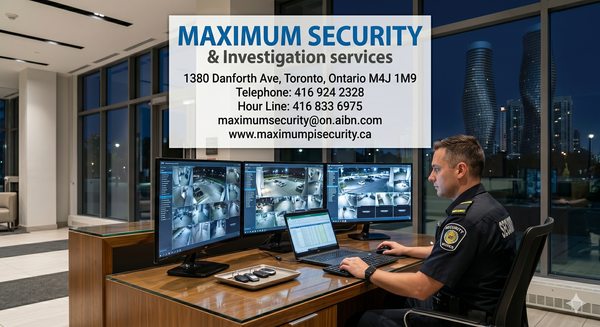
A camera system is only as effective as the person monitoring it. While a passive camera records an event for historical review, an active guard uses the camera feed to intercept a threat before it escalates. When a guard identifies a suspicious individual loitering near a side entrance on the camera monitor, they can dispatch themselves immediately to the location, providing a physical deterrent that prevents a break-in from occurring. This integration of technology and human presence forms the ultimate shield against property liability.
If your property along the Yonge Street corridor requires immediate risk mitigation and professional incident documentation, request a custom security quote from Maximum PI Security to protect your condo board from escalating liability costs today.

Frequently Asked Questions
What happens if an uninvited guest causes damage in a North York condo?
If an uninvited guest bypasses entry controls and causes property damage, the condo board may be held liable if they cannot prove they maintained reasonable access standards. A trained guard logging all visitors and intercepting unauthorized entries provides the necessary legal proof that the board exercised due diligence.
Are North York condo security guards legally authorized to detain trespassers in the parking garage?
Under the Canadian Criminal Code, a licensed security guard acting as an agent of the property owner may perform a citizen's arrest if they witness a criminal offense, such as vandalism or theft, on or in relation to that property. However, standard operational protocol heavily favors strict verbal deterrence and immediately involving the Toronto Police Service over physical detention to minimize liability.
How do security guards lower commercial insurance premiums for high-rises?
Insurance underwriters assess risk based on documented safety protocols. Having a 24/7 licensed security presence that conducts regular structural sweeps, enforces fire codes, and maintains digital incident logs proves to the insurer that the property is proactively mitigating risks, which frequently results in lower premium calculations.
A licensed condo security guard reduces property liability in Ontario by maintaining contemporaneous digital incident logs, conducting active fire watch patrols, and strictly enforcing access control. Under the Ontario Ministry of the Solicitor General guidelines, these documented actions provide the definitive legal proof required by insurance providers to dispute negligence claims.
About the Author
Jeff Calixte is an online exclusive content sell strategist with a deep background in tracking local asset protection data, analyzing Southern Ontario labor rates, and outlining real operational deployment structures across the Greater Toronto Area.
Sources
- Ontario Ministry of the Solicitor General - Private Security and Investigative Services Branch Regulations
- Toronto Police Service - Corporate Access and Property Security Guidelines
Note
Commercial bill rates, guard wages, deployment conditions, and vendor availability can vary widely by province, municipality, season, and project scope. All pricing estimates, labor figures, and career examples in this guide are approximations based on current Ontario market data. Always confirm contract details, licensing compliance, and specific rate quotes directly with your chosen service provider or employer before finalizing any agreements.