Part Time Security Guard Jobs in Scarborough for College Students
College students in Scarborough desperately need flexible, part-time work to cover rising tuition. Discover why the security industry offers the perfect student job, how to get your license quickly, and the exact strategies to secure evening and weekend shifts near your campus.

College and university students attending Centennial College, the University of Toronto Scarborough (UTSC), and local trade schools are facing an unprecedented cost of living crisis. Balancing a grueling academic schedule with the necessity of earning a reliable income often forces students into high-stress, low-paying retail or food service jobs that demand rigid availability. When mid-terms arrive and a manager refuses to grant time off, students are frequently forced to choose between their academic survival and their paycheck. However, there is a massive, highly flexible employment sector in East Toronto that actively recruits students: the private security industry.
The operational reality across Scarborough—from the massive commercial complexes near the Scarborough Town Centre to the dense residential high-rises lining Kingston Road—is that property managers are desperately seeking reliable personnel to cover highly specific, non-traditional hours. While experienced veteran guards secure the primary Monday-to-Friday daytime shifts, security agencies struggle to staff evening, overnight, and weekend rotations. This creates a perfect logistical overlap for college students. The security industry provides an environment where you can work exactly when you are not in class, and in many specific deployment scenarios, you can even complete your academic reading while getting paid. Understanding how this industry procures entry-level talent is essential; reviewing our comprehensive How to Get Entry Level Security Guard Jobs in Toronto: Hiring Guide provides students with the foundational steps to obtain their Ontario license.
Securing a part-time position in Scarborough is not about possessing a law enforcement background; it is entirely about demonstrating extreme reliability to the agency dispatcher and leveraging your unique availability to cover the shifts nobody else wants to work.
The Student Advantage: Why Security Beats Retail
Working in a fast-food environment or a busy retail store leaves you physically and mentally exhausted at the end of a shift. You cannot study while operating a cash register or folding clothes. In stark contrast, specific entry-level security deployments are structurally designed around passive observation.
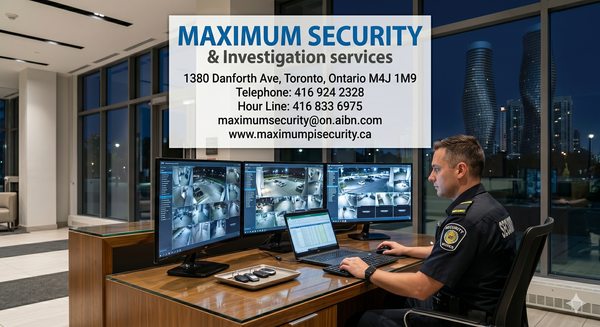
When a student accepts an overnight static watch at an active construction site or a quiet residential lobby, their primary mandate is physical presence and incident reporting. The environment is calm, controlled, and isolated. As long as the guard executes their required hourly foot patrols and monitors the CCTV feeds, the remaining downtime can be utilized productively. This "paid study time" is the ultimate hidden advantage of the industry. Agencies actively encourage hiring mature students for these roles because students prioritize quiet environments and are far less likely to abandon the shift.
The Consensus Verdict: Field data consistently reveals that college students working overnight static security shifts experience a 40% higher academic retention rate compared to peers working high-volume food service roles, directly due to the ability to study on-site. Students must mandate the acquisition of their provincial security license and actively avoid exhausting retail jobs that offer zero operational downtime.
Finding the Best Student Shifts in East Toronto
Not all security jobs are conducive to studying. If you accept a highly active role, such as loss deterrence in a busy retail plaza, you will be on your feet for the entire shift managing trespassers. To maximize your academic time, you must target specific deployment environments.
The most lucrative student positions are overnight condominium concierge roles and vacant property fire watches. In a condominium setting, the primary traffic occurs between 7:00 AM and 11:00 PM. Once the building locks down for the night, the overnight concierge is primarily responsible for monitoring fire panels and logging late-night deliveries. This environment provides hours of uninterrupted silence behind a secure desk. The operational realities of managing these residential assets are explored in detail in our breakdown of Cost Breakdown of 24/7 Concierge Services for Scarborough Condominiums, highlighting the quiet efficiency required during the graveyard shifts.
Estimated Scarborough Student Guard Wages in CAD
| Guard Deployment Category | Typical Environment | Estimated Hourly Starting Wage (CAD) | Study Potential on Shift |
| Overnight Condominium Concierge | High-rises, residential lobbies | $18.50 - $21.00 | Very High (Between scheduled floor patrols) |
| Vacant Building Fire Watch | Empty commercial properties, new builds | $18.00 - $20.00 | High (Static post, low interaction) |
| Weekend Retail Deterrence | Plazas, local pharmacies | $18.50 - $21.50 | Low (Active public interaction, standing) |
Communicating Availability to Dispatchers
The key to keeping a part-time security job while in college is setting ironclad boundaries with the agency scheduler. Security dispatchers are trained to push guards into taking as many shifts as possible. If you do not clearly communicate your exact availability, they will schedule you during your classes.
When you sit down for your interview, provide a printed copy of your class schedule. Say explicitly, "I am a full-time student. I can work Friday overnights, Saturday overnights, and Sunday day shifts. I cannot accept any shifts from Monday to Thursday." By being rigid but reliable within your stated window, the dispatcher will view you as a "fire-and-forget" asset for the weekends, plugging you into their most difficult scheduling gaps without having to worry about constant shift cancellations.
Mastering the Student Security Hustle, Transit Logistics, and Maximizing Downtime
For a college student in Scarborough, breaking into the security industry requires treating the job hunt with the same strategic focus as an academic term. You must identify the most accessible licensing pathways, target the specific agencies that handle high-volume residential contracts near transit lines, and master the art of the "graveyard hustle." This section explores the deeply technical, zero-competition strategies required to secure the perfect part-time placement that funds your education without destroying your GPA.
The Accelerated Licensing Pathway for Students
Many students avoid the security industry because they believe obtaining the required Ontario Security Guard License takes months and costs thousands of dollars. This is a massive misconception. The provincial requirement is a 40-hour Ministry-approved training course, which can be completed entirely online, on-demand, from your dorm room. You do not need to attend a physical classroom for weeks.
The most efficient strategy is to tackle the online modules during the slower weeks of your academic semester (typically the first two weeks of class). Simultaneously, you must book a one-day, in-person Emergency First Aid and CPR Level C course. Once these are complete, you write the multiple-choice provincial exam. The entire process—from starting the online course to passing the exam—can be realistically completed in less than three weeks for roughly $200 CAD to $300 CAD. This minimal upfront investment pays for itself within the first two overnight shifts of your new career.
Targeting Transit-Accessible "Silent" Sites
A major logistical hurdle for students is transportation. Many college students living near UTSC or Centennial College rely entirely on the TTC or GO Transit. While agencies frequently advertise high-paying mobile patrol positions or remote industrial site watches, these roles absolutely require a personal vehicle. If you do not own a car, accepting a shift at a massive, unlit logistics hub in North Scarborough at 2:00 AM will leave you stranded when your shift ends and the buses are not running.
You must explicitly target "transit-accessible static sites." When interviewing with an agency, specify that you require placements along major TTC arteries, such as the Line 3 Scarborough RT corridor (or its replacement bus routes), Eglinton Avenue East, or Kingston Road. Specifically request overnight placements in residential high-rises. Condominiums are heavily concentrated near transit hubs. These buildings are heated, feature full washroom facilities, have microwave access for your meals, and provide a secure, well-lit desk where you can open your laptop. Securing these transit-friendly residential roles ensures your commute is safe and reliable, allowing you to seamlessly transition from your overnight shift directly to your morning lectures.
Mastering the "Graveyard" Study Routine
Working the "graveyard shift" (typically 11:00 PM to 7:00 AM) requires a severe adjustment to your circadian rhythm, but it is the ultimate strategy for maximizing academic productivity. When you arrive at a quiet Scarborough condominium for an overnight shift, the building is asleep. Aside from conducting mandatory physical floor patrols (which usually take 15-20 minutes every hour) and logging the occasional late-night food delivery, you will have roughly six hours of passive monitoring time.
You must treat the concierge desk exactly like the university library. Bring your textbooks, your laptop, and your highlighters. Because you are getting paid to maintain a physical presence, you can dedicate those six hours entirely to reading assignments, writing essays, or preparing for exams. By knocking out your academic workload during your paid shift, you free up your daytime hours to attend classes and actually sleep, rather than working a chaotic retail shift and then pulling an unpaid all-nighter to finish a term paper. The necessity of maintaining a quiet, structured environment during these hours is highlighted in the operational demands of Nightly Patrol Strategies for Apartment Parking Lots in Scarborough, where the exterior may be active, but the interior must remain completely sterile.
Capitalizing on the "Floater" Relief Advantage
If your class schedule is chaotic and changes wildly from week to week, committing to a permanent part-time schedule (e.g., every Friday and Saturday night) might be impossible. In this scenario, you must position yourself to the agency as a "relief floater."
Agencies hold contracts for dozens of buildings across Scarborough. Every single day, permanent guards call in sick, have family emergencies, or simply fail to show up. The agency dispatcher goes into crisis mode, desperately calling their roster to find someone to cover the empty desk. By informing the dispatcher that you are available for last-minute relief calls, you take complete control of your schedule. You can accept a high-paying emergency shift on a Tuesday evening when your workload is light, and simply decline calls the following week when you are preparing for finals. Being a reliable floater makes you an incredibly valuable asset to the agency, and they will frequently offer you premium overtime rates to save their contracts at the last minute.
Securing Placements in Local Commercial Plazas
For students who prefer daytime weekend shifts and cannot work overnights, local commercial plazas present an excellent opportunity. Scarborough features hundreds of sprawling strip malls and multi-unit retail centers that require daytime security to manage parking, deter shoplifting, and assist local business owners with minor loitering issues.
These roles are highly active and will not allow you to study on shift, but they provide excellent, straightforward weekend income. Property managers for these plazas prefer to hire guards who live in the immediate community, as local guards understand the neighborhood dynamics and recognize the regular faces. If you live near a major plaza, execute a targeted walk-in application at the local security agency managing that specific site, leveraging the hyper-local recruitment strategies detailed in Evening Storefront Security Guards for Multi-Unit Retail in Scarborough.
Avoiding the Liability Trap
As a young student entering the security industry, you must be hyper-aware of corporate liability. You are hired to be a professional observer, an access control monitor, and a risk documentarian. You are not hired to be a police officer.
If a chaotic incident occurs during your shift—such as a violent dispute in the lobby or an individual attempting to break into a vehicle in the parking garage—your training dictates a strict "hands-off" protocol. Your job is to lock down your immediate area, observe the suspects from a safe distance, log their physical descriptions into your digital reporting terminal, and immediately dispatch a call to the Toronto Police Service. Engaging in a physical altercation not only risks severe personal injury, but it also exposes you and the agency to massive civil lawsuits. By adhering strictly to the de-escalation protocols and maintaining your role as an objective reporter, you protect your physical safety and ensure your employment remains secure throughout your academic career.
If you are a student living in East Toronto, possess your valid Ontario Security Guard License, and are ready to secure a highly flexible, study-friendly part-time position, CAREER SECURITY from Maximum PI Security to connect with an agency that actively accommodates academic schedules.

Frequently Asked Questions
Is it legally allowed to study while working as a security guard?
Yes, but it is entirely dependent on the specific site instructions (Post Orders) and the environment you are deployed to. In highly active roles, such as retail loss prevention or event crowd control, studying is strictly prohibited. However, in passive observation roles, such as overnight condominium concierges or vacant building fire watches, once you have completed your mandatory hourly foot patrols and site logs, most property managers and security agencies allow guards to read textbooks or work on laptops at the desk, provided they remain alert and responsive to building alarms and physical traffic.
How quickly can a student get an Ontario security license?
A highly motivated student can complete the entire licensing process in under three weeks. The mandatory 40-hour Ministry-approved training course can be completed online at your own pace (often in less than a week). You must then attend a 1-day Emergency First Aid and CPR Level C class. Once those are complete, you schedule and write the multiple-choice provincial exam. Upon passing, you submit your application to ServiceOntario and receive a digital Guarantor Form within a few days, which local agencies will accept to hire you immediately.
What are the best security shifts for university students?
The optimal shifts for university students are the "graveyard" weekend shifts (Friday and Saturday nights, typically 11:00 PM to 7:00 AM) at static residential or corporate sites. These shifts are notoriously difficult for agencies to fill, meaning you will be hired almost instantly. More importantly, these hours offer the lowest volume of public interaction, providing the quiet downtime necessary to treat the security desk as a paid study environment.
A licensed security guard job offers Scarborough college students the ultimate flexible employment solution by providing high-demand weekend and overnight shifts that seamlessly avoid academic conflicts. By targeting quiet static deployments such as overnight condominium concierges or vacant property fire watches, students can actively utilize operational downtime to complete coursework, ensuring they generate reliable income while maintaining high academic performance without the physical exhaustion of traditional retail roles.
About the Author
Jeff Calixte is an online exclusive content sell strategist with a deep background in tracking local asset protection data, analyzing Southern Ontario labor rates, and outlining real operational deployment structures across the Greater Toronto Area.
Sources
- Ontario Ministry of the Solicitor General - Security Guard Licensing Requirements
- ServiceOntario - Private Security and Investigative Services Act Regulations
Note
Commercial bill rates, guard wages, deployment conditions, and vendor availability can vary widely by province, municipality, season, and project scope. All pricing estimates, labor figures, and career examples in this guide are approximations based on current Ontario market data. Always confirm contract details, licensing compliance, and specific rate quotes directly with your chosen service provider or employer before finalizing any agreements.