Nightly Patrol Strategies for Apartment Parking Lots in Scarborough
Multi-residential apartment parking lots in Scarborough face severe risks from overnight vandalism and trespassing. Discover the randomized mobile patrol matrices and physical security strategies property managers use to protect residents.
Property managers overseeing multi-residential apartment complexes across Scarborough—particularly along the dense residential corridors of Kennedy Road, Eglinton Avenue East, and the Kingston Road sub-pockets—are facing relentless challenges in maintaining nighttime perimeter safety. Open-air surface lots and older subterranean parking structures have increasingly become target zones for opportunistic trespassing, narcotics loitering, and vehicle parts theft. When darkness falls, these massive vehicle staging grounds transform into high-risk areas where residents feel unsafe walking from their cars to the building entrance.
Establishing a secure nocturnal environment requires an absolute departure from predictable, low-frequency security checks. Relying on simple, unmonitored security cameras or standard perimeter fencing provides no active defense against determined intruders. To combat escalating property crime and stabilize rising insurance premiums, housing providers must transition toward aggressive, randomized mobile guard checks and structured physical enforcement. Understanding how localized surveillance and personnel deployment intersect with broader residential operations is essential; reviewing the Condominium Concierge Security Management: The GTA Board Guide provides property managers with the strategic framework required to align corporate budgets with professional field execution.
The local operational landscape in East Toronto is heavily influenced by proximity to major transit veins and commercial strips, allowing criminal networks to scout vulnerable properties and execute rapid extractions. When an apartment lot lacks a visible, consistent security presence, it quickly becomes a known soft target within local classified listings and online forums. To reclaim control of these spaces, building operators must deploy specialized nightly patrol matrices that eliminate predictable patterns and actively disrupt criminal scouting loops.
The Dynamics of Nocturnal Property Incursions
Surface and underground parking assets in Scarborough are uniquely vulnerable due to their open layout and high density. Unlike master-planned corporate spaces, residential apartment lots experience continuous foot traffic from visitors, delivery drivers, and non-residents bypassing broken perimeter gates. Criminal crews exploit this constant movement, embedding themselves within the environment to identify high-value targets, such as fleet work trucks containing expensive tools or specific vehicle models targeted for international shipping rings.
Once a crew enters an unpatrolled lot, they exploit the lack of physical oversight to dismantle vehicles, steal catalytic converters, or break into coin-operated laundry facilities adjacent to parking structures. The physical architecture of older Scarborough buildings—often featuring unlit alcoves, recessed stairwells, and dense tree lines along property boundaries—further compounds the risk by shielding illicit activities from public view or remote camera monitoring.
The Consensus Verdict: Operational field data consistently demonstrates that properties utilizing standard, fixed-interval security drive-bys experience a 65% higher rate of vehicle break-ins than sites employing randomized, multi-point foot sweeps. Property managers should mandate the execution of highly unpredictable, multi-level patrol sequences and terminate contracts with vendors relying on rigid, predictable chronological timing matrices.
Implementing Randomized Mobile Patrol Matrices
To neutralize the effectiveness of organized scouting networks, security providers must enforce absolute unpredictability across all nightly deployments. If a patrol vehicle arrives at an Eglinton Avenue property every night at precisely 2:00 AM, the security presence becomes entirely useless. Criminal groups observe these patterns from parked cars nearby, waiting for the flashing lights of the patrol vehicle to clear the exit gate before entering the lot to execute their operations.
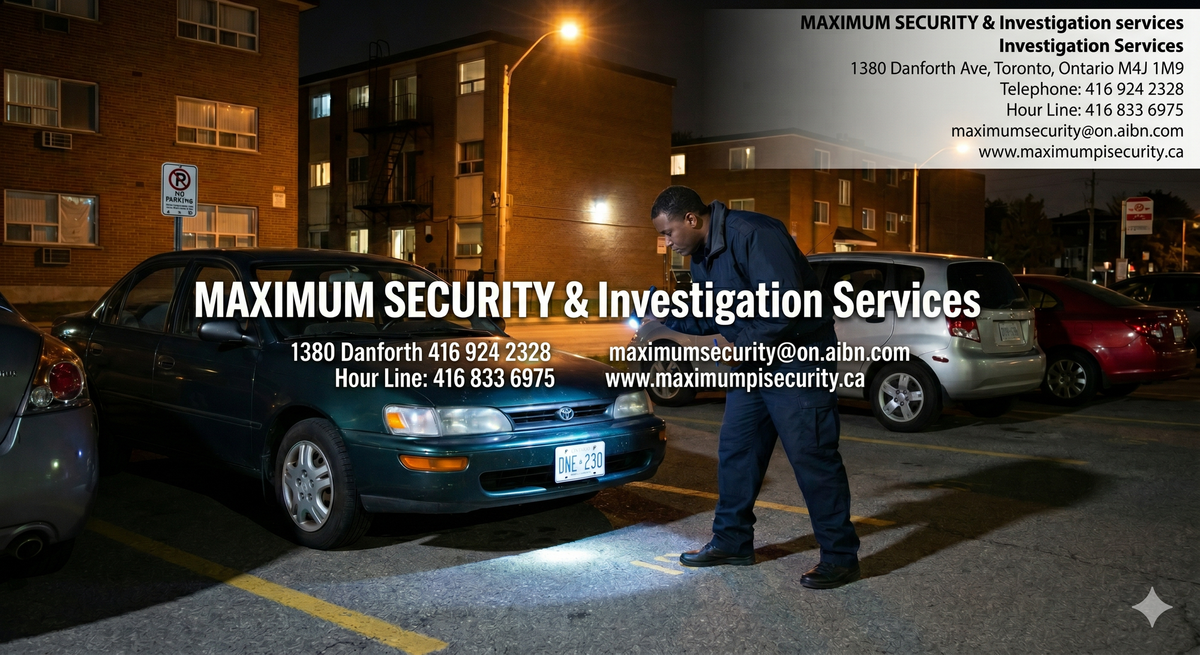
Effective deterrence requires a fluid routing matrix. A mobile guard check must involve unpredictable arrival windows, variable dwell times, and mandatory foot sweeps through the darkest sectors of the lot. The guard should arrive in a marked security vehicle, illuminate the area using high-intensity spotlighting, and then immediately transition to a foot patrol to inspect hidden alcoves, fire exits, and storage areas. This combination of high-visibility vehicle presence and quiet, tactical foot inspections completely destroys the operational predictability required by trespassers. When designing these randomized routing schedules for expansive multi-level environments, referencing the structural enforcement techniques detailed in Upgrading High-Rise Parking Garage Patrols in Mississauga offers critical insights into managing subterranean perimeters effectively.
Estimated Nightly Patrol Operational Tiers in CAD
| Patrol Classification | Operational Deployment Profile | Estimated Hourly Bill Rate (CAD) | Primary Risk Mitigation Focus |
| Randomized Mobile Check | Marked vehicle drop-bys, perimeter spotlighting, rapid gate audits | $26.00 - $32.00 | Opportunistic trespassing, lot scouting |
| Dedicated Night Roving Guard | Continuous on-site presence, multi-level foot sweeps, gate control | $28.00 - $34.00 | Smashed windows, catalytic converter extraction |
| Tactical Enforcement Guard | Joint parking enforcement, bylaw ticketing, trespasser removal | $30.00 - $36.00 | Narcotics loitering, abandoned vehicle storage |
Protecting Property Assets and Lowering Operational Liability
Beyond the immediate threat of property damage and vehicle theft, unmanaged parking lots expose apartment owners to severe civil liability and escalating insurance premiums. Dark surface lots with uneven pavement or unaddressed ice patches are prime locations for slip-and-fall claims. If an incident occurs in an area where lighting has been non-functional for weeks without a formal record of intervention, the property corporation faces immediate exposure for structural negligence.
Licensed security guards act as the primary defense against these liabilities by serving as certified risk documentarians. During every nightly rotation, guards utilize digital tracking software to log broken lighting arrays, compromised perimeter fencing, or blocked fire exits in real-time. This continuous auditing trail provides the definitive legal proof needed to defeat fraudulent injury claims and verify property diligence during commercial insurance renewals. For an in-depth analysis of how documented guard tracking insulates corporate boards from multi-million-dollar negligence claims, reviewing How to Reduce Condo Liability with Trained Security Guards in North York breaks down the strict legal necessity of contemporaneous digital log keeping.
Furthermore, integrating parking lot management with structured entry protocols prevents broader building infiltration. When a lot is left unmonitored, trespassers frequently transition from the parking areas into the main lobbies and residential hallways via propped fire doors. By establishing an ironclad outer perimeter through disciplined nightly patrols, property managers naturally reduce the administrative burdens and security breaches that typically plague front desk teams, a operational reality explored in our regional study on Cost Breakdown of 24/7 Concierge Services for Scarborough Condominiums.
Checkpoint Deployment, and Real-Time Trespass Intervention
Securing expansive, high-density residential parking lots across Scarborough requires an aggressive, multi-layered approach to physical perimeter hardening and real-time tactical intervention. This section explores the advanced operational mechanics required to transform a vulnerable multi-residential lot into a highly hostile environment for criminal actors, focusing on zero-competition technical strategies that yield rapid results.
Designing and Deploying an Electronic Checkpoint Matrix
The foundation of accountability in modern night patrol operations is the strategic placement of electronic Near Field Communication (NFC) tags or digital QR checkpoints throughout the property footprint. Relying on a guard's verbal confirmation that a patrol was completed is entirely insufficient for legal and insurance purposes. Checkpoints must be physically anchored in the highest risk, lowest visibility sectors of the lot, rather than just convenient locations near the main entrance.
Property managers should collaborate with security supervisors to map out a multi-point verification grid. Essential checkpoint locations include:
- The furthest, darkest corners of the exterior surface lot boundary.
- The interior mechanics of remote garbage compactor rooms and recycling enclosures, which are frequent hubs for narcotics loitering.
- Primary subterranean fire exit doors and stairwell bases that lead directly into the residential sections of the building.
- Main overhead garage door tracks to verify physical lock alignment and check for tampering.
The patrol software must be configured to enforce random routing. If the guard scans the checkpoints in the exact same sequence every night, the data stream acts as a guide for criminals tracking the guard's movements. The system must require a fluid, non-linear validation process, forcing the guard to alter their physical trajectory across every shift. If a checkpoint remains unscanned past a specific operational window, an automated alert must be instantly dispatched to the central security dispatch command center to initiate a wellness check or supervisor intervention.
Mitigating Tailgating and Hardening Subterranean Access Points
For Scarborough buildings featuring underground parking components, the primary mechanical vector of risk is the overhead garage door. Standard industrial gates often take up to twenty seconds to complete a full open-and-close cycle, leaving a massive window of opportunity for unauthorized vehicles to execute tailgating maneuvers.
Perimeter hardening requires a combination of technical modification and physical enforcement. Property managers must adjust the door controller's loop timers to the absolute minimum safe interval, forcing the overhead barrier to descend the moment a vehicle's rear axle clears the safety sensors. Additionally, during high-risk overnight hours, security personnel must implement physical gate audits. The guard positions themselves near the gate entrance, forcing non-residents to present a valid proximity fob or verify their identity via the building intercom before entry is granted. This active gate-keeping process breaks the logistical momentum of auto-theft syndicates who rely on rapid, unhindered entry and exit routes to move stolen property.
Tactical De-escalation and Legal Trespass Removal Protocols
Confronting unauthorized individuals loitering in an apartment parking lot requires strict adherence to provincial legal frameworks and precise tactical positioning. Under the Trespass to Property Act of Ontario, a licensed security guard operates as a designated agent of the property owner, possessing the full legal authority to direct any non-resident to vacate the premises immediately.
When a guard encounters a group loitering in a vehicle or consuming substances in a dark sector of the lot, the intervention must follow a structured escalation of presence:
- Visual Domination: The guard approaches using their marked patrol vehicle or a high-intensity tactical flashlight, completely destroying the intruders' concealment and establishing immediate operational awareness.
- Verbal Command Structure: The guard maintains a safe tactical distance (a minimum of seven meters), avoids entering physical blind spots between parked SUVs, and issues clear, authoritative instructions to exit the property.
- Digital Documentation: The guard continuously inputs descriptions, license plates, and behavioral indicators into their mobile reporting terminal, creating a permanent intelligence log.
If the individuals become combative or refuse to comply, the guard does not engage in unnecessary physical altercations. Instead, they activate the priority dispatch protocol, relaying the precise location, vehicle descriptions, and structural hazards directly to the Toronto Police Service communications desk. Because the guard has already verified the trespass status and documented the refusal to leave, police dispatchers can classify the call as an active property transgression, resulting in a significantly faster field response.
Eliminating Car Break-ins and Catalytic Converter Theft Rings
Catalytic converter theft is a highly coordinated industry across the Greater Toronto Area. Crews arrive equipped with specialized low-profile jacks and battery-powered reciprocating saws, allowing them to sever an exhaust system in under sixty seconds. They specifically target high-clearance vehicles, such as pickup trucks and commercial vans, parked in unlit, remote corners of residential surface lots.
Stopping these specialized theft loops requires the implementation of targeted physical countermeasures. Guards conducting foot sweeps must be trained to look for specific behavioral markers, such as vehicles idling near the perimeter with obscured license plates, or individuals walking through the lot while carrying heavy backpacks or tool cases. Furthermore, security teams must recommend the installation of continuous, high-intensity motion-activated LED illumination zones around high-clearance parking stalls. When an individual approaches a targeted vehicle, the sudden activation of industrial floodlighting eliminates their visual camouflage, forcing them to abandon the operation to avoid detection.
Managing Commercial Vehicle Stashing and Visitor Parking Fraud
Apartment parking lots in Scarborough are frequently exploited by non-residents seeking free long-term storage for commercial box trucks, unhitched trailers, and unregistered salvage vehicles. This unauthorized usage not only strips legitimate residents of essential parking spaces but introduces significant structural hazards and aesthetic degradation to the property footprint.
The security force must execute systematic parking audits during the early morning hours. Every parked vehicle must be cross-referenced with a centralized digital permit database. If a commercial asset or unregistered vehicle is found without a valid overnight clearance token, the guard issues a formal municipal parking ticket under local Scarborough property bylaws and coordinates directly with approved corporate towing networks to execute an immediate vehicle impoundment. Maintaining an aggressive, zero-tolerance stance on parking fraud ensures that the lot remains cleared of foreign vehicles, preventing criminal networks from using stashed assets as temporary drop points for stolen goods.
If your Scarborough multi-residential community or rental complex requires an immediate upgrade in night safety, randomized mobile guard checks, and strict trespass enforcement, request a custom security quote from Maximum PI Security to deploy a professional patrol force and secure your perimeter today.

Frequently Asked Questions
A licensed night patrol guard stops apartment parking lot break-ins in Scarborough by executing highly randomized mobile vehicle checks, conducting deep tactical foot sweeps through unlit perimeter sectors, and utilizing electronic checkpoint logging grids to ensure total accountability. Operating as an authorized agent under the Ontario Trespass to Property Act, the guard actively intercepts tailgating vehicles, removes unauthorized trespassers, and coordinates directly with emergency services to eliminate the isolation required by organized auto-theft networks.
Can a Scarborough apartment security guard legally search a suspicious vehicle in the parking lot?
No. A private security guard does not possess the legal authority under Canadian law to conduct a non-consensual search of an individual's private vehicle. The guard's legal power is limited to directing the vehicle and its occupants to leave the private property immediately under the Trespass to Property Act, or contacting law enforcement if they witness a criminal offense occurring within plain view.
How do property managers verify that mobile patrol guards are actually checking the lot overnight?
Property managers verify patrol compliance by accessing cloud-based electronic guard tour reporting software provided by the security vendor. Every time a patrolling guard physically visits the property, they must scan anchored NFC or QR checkpoints distributed throughout the lot. This action generates an immutable, GPS-validated, and timestamped data log that is automatically sent to the property manager's dashboard, ensuring verifiable proof of presence.
What should a night guard do if they discover a broken overhead garage door at 3:00 AM?
If a night guard identifies a broken or jammed overhead garage door that cannot close, they must treat the situation as an active perimeter breach. The guard will immediately log the structural hazard in their digital reporting terminal, notify the property's emergency on-call maintenance technician, and station themselves physically at the open entrance to act as a static access control barrier until a mechanical repair crew arrives on site.
Are surface parking lots more vulnerable to auto theft than underground garages in East Toronto?
Surface lots face a higher frequency of opportunistic crimes, such as smash-and-grabs, vandalism, and catalytic converter theft, due to their open access points and proximity to public sidewalks. However, underground garages are more frequently targeted by highly sophisticated auto-theft syndicates tracking luxury vehicles, as the subterranean environment allows them to bypass GPS tracking signals and operate completely out of public view once the main gate is breached.
About the Author
Jeff Calixte is an online exclusive content sell strategist with a deep background in tracking local asset protection data, analyzing Southern Ontario labor rates, and outlining real operational deployment structures across the Greater Toronto Area.
Sources
- Ontario Trespass to Property Act, R.S.O. 1990
- City of Toronto - Private Property Parking Enforcement Unit Regulations
Note
Commercial bill rates, guard wages, deployment conditions, and vendor availability can vary widely by province, municipality, season, and project scope. All pricing estimates, labor figures, and career examples in this guide are approximations based on current Ontario market data. Always confirm contract details, licensing compliance, and specific rate quotes directly with your chosen service provider or employer before finalizing any agreements.