Downtown Toronto Condo Security: Managing Visitor Access Control Safely
Managing high-traffic visitor flows, short-term rentals, and endless food deliveries in Downtown Toronto high-rises requires strict access control. Discover the specialized concierge protocols and digital tracking systems needed to secure your condo lobby and protect resident privacy.
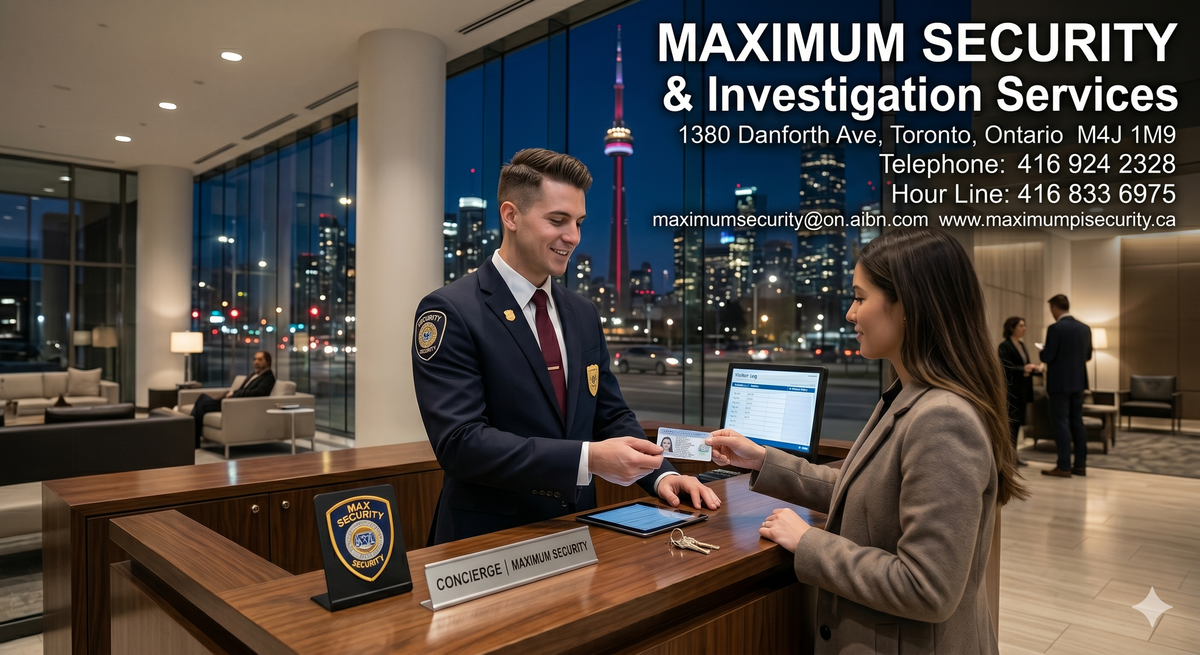
High-density residential buildings clustered throughout the Entertainment District, CityPlace, and the Bay Street corridor operate less like traditional homes and more like major commercial transit hubs. On any given Friday evening, a single Downtown Toronto high-rise lobby is flooded with food delivery couriers, short-term rental guests hauling luggage, dog walkers, and unverified visitors. Without an ironclad visitor access control system, this chaotic foot traffic inevitably bleeds into secure residential hallways, resulting in property damage, noise complaints, and severe safety breaches.
For property managers and condo boards, the sheer volume of transient traffic presents a massive liability. Relying on an unmonitored intercom or a passive fob entry system is no longer sufficient. Criminal elements frequently exploit the "tailgating" method—simply catching the door behind a distracted resident—to bypass the front lobby entirely. Establishing a secure perimeter requires specialized, trained personnel operating under strict, standardized procedures. For a foundational look at how boards structure these operations, reviewing the Condominium Concierge Security Management: The GTA Board Guide is critical for setting up effective baseline protocols.
The localized risks are severe. Buildings near King and Bathurst or Queens Quay face relentless pressure from late-night partygoers attempting to bypass building security to reach unauthorized short-term rental units. Without a professional concierge enforcing a strict sign-in mandate, verifying government-issued identification, and cross-referencing visitor logs with authorized resident lists, the condo board completely loses control of its internal environment.
Short-Term Rentals and the Phantom Guest Problem
One of the most persistent threats to Downtown Toronto condo security is the covert operation of unauthorized short-term rentals. While many condo bylaws explicitly ban these rentals, owners frequently bypass the rules, transforming quiet residential floors into high-turnover hotel corridors. This leads to profound wear and tear on the elevators, noise bylaw infractions, and significant resident distress.
The Consensus Verdict: Field data consistently reveals that buildings lacking a mandatory physical ID check at the front desk experience a 60% higher rate of unauthorized short-term rental traffic. Deploy a trained concierge to cross-reference every new arrival with the authorized resident ledger. If the "guest" cannot produce an authorized entry pass from a verified resident, deny entry immediately. Avoid self-serve lockboxes hanging on exterior fences at all costs.
Managing the Delivery Logistics Bottleneck
The explosion of app-based food and package deliveries has turned the modern condo lobby into a chaotic staging ground. Couriers are under extreme time constraints and will frequently abandon packages in unsecured vestibules or attempt to follow residents onto the elevators to speed up their route. This presents a massive vulnerability. Unescorted couriers wandering the residential floors have access to private unit doors, creating an unacceptable security gap.
To maintain building integrity, the concierge must act as the absolute choke point for all logistics. By enforcing a "lobby-only" drop-off policy for food couriers and implementing a digital package-logging system, the guard ensures that unknown individuals never penetrate the secure residential zones. Similar to the logistical controls needed during extensive builds—as detailed in our guide on Front Desk Security Concierge Solutions for Etobicoke High-Rises—managing external vendors requires strict physical boundaries.
Downtown Guard Access Control Deployment Tiers in CAD
| Security Function | Operational Focus | Estimated Hourly Bill Rate (CAD) | Threat Mitigation Target |
| Basic Access Control | Lobby sign-in, package sorting, fob verification | $24.00 - $28.00 | Tailgating, unverified deliveries |
| Short-Term Rental Enforcement | ID cross-referencing, luggage monitoring, unit auditing | $28.00 - $32.00 | Unauthorized transient guests, noise complaints |
| Tactical Roving Patrol | Hallway sweeps, amenity clearing, stairwell checks | $30.00 - $35.00 | Loitering, vandalism, unauthorized parties |
Tailgating and Physical Perimeter Breaches
Tailgating is the simplest and most common method of bypassing Downtown Toronto condo security. An authorized resident swipes their fob, the door opens, and a stranger simply walks in right behind them. Residents, wanting to be polite, rarely confront these individuals. A trained security concierge serves as the necessary physical barrier. When a tailgater is spotted, the guard intercepts them immediately, forcing them to return to the vestibule and use the intercom to verify their destination. This immediate, visible enforcement not only stops the immediate threat but establishes a reputation that the building is difficult to penetrate.
The Ultimate Strategy for Securing High-Traffic Condo Amenities and Visitor Parking
While the front lobby serves as the primary choke point, the secondary access points in a Downtown Toronto condominium are frequently the most vulnerable. Amenities such as rooftop patios, fitness centers, and multi-level underground parking garages represent massive security blind spots if visitor access is not rigorously controlled. This deep dive explores the precise operational strategies required to lock down these secondary zones against unauthorized use and criminal exploitation.
Locking Down the Subterranean Perimeter: Visitor Parking Control
In the dense urban core, visitor parking spaces are a premium commodity. Condos near the Rogers Centre, Scotiabank Arena, or the Entertainment District are constantly targeted by non-residents seeking free parking for events. This unauthorized usage not only frustrates legitimate residents who need spaces for their actual guests, but it introduces unknown, unvetted vehicles into the secured subterranean footprint of the building.
Effective visitor parking control requires a multifaceted approach. Passive enforcement, such as a simple sign warning of towing, is completely ineffective against determined event-goers. The concierge must manage a strict digital permit system. When a resident requests a parking pass, the visitor's license plate, make, and model must be logged in the centralized security database. The guard must then physically audit the visitor lot during their scheduled patrols. If a vehicle is found without a registered digital permit, the guard immediately contacts an authorized municipal towing vendor.
The integration of physical patrols is crucial here. As explored in the Condo Parking Enforcement Security Guards in Mississauga: Guide, random sweeps of the underground garage do more than check for parking permits; they actively deter organized auto theft rings from scouting the lot. The presence of a uniformed guard in a high-visibility vest conducting plate audits stops criminals from targeting high-value vehicles in the resident sections of the garage.
Amenity Abuse and Unauthorized Gatherings
Luxury amenities are a major selling point for downtown properties. However, rooftop pools, private theaters, and large party rooms are frequently abused by residents who invite excessive numbers of unregistered guests. This leads to severe liability issues, including property damage, alcohol-related incidents, and major disruptions to the quiet enjoyment of the building.
Controlling access to these spaces cannot be left solely to fob restrictions, as residents will simply prop doors open to allow their friends inside. A dedicated tactical guard must be deployed during high-risk periods—specifically Friday and Saturday nights—to perform continuous sweeps of the amenity floors. The guard's mandate is to verify that the number of guests matches the approved booking manifest. If a resident has booked the party room for ten people and forty people are present, the guard immediately shuts down the event, forces the unauthorized guests to vacate the premises, and documents the bylaw infraction for the property manager.
Navigating the Legalities of Intercepting Uninvited Guests
Property managers often struggle with the legal boundaries of denying entry to a building. Under the Trespass to Property Act of Ontario, the condo corporation, acting through its licensed security guards, has the absolute right to direct any person to leave the premises if they are not an owner, a registered tenant, or an invited guest.
The complexity arises when an individual claims to be visiting a resident who is not answering their intercom. A common tactic for trespassers is to claim they are visiting "John in unit 1204," hoping the guard will simply let them up. A rigorously trained concierge never bypasses the verification protocol. If the resident cannot be reached to physically vouch for the visitor, the visitor is denied entry. There are no exceptions. This strict adherence to policy protects the board from liability claims if the individual later causes harm or damage, a concept thoroughly detailed in our analysis of How to Reduce Condo Liability with Trained Security Guards in North York.
Elevator Access Control and Floor Lockdowns
To further compartmentalize risk, modern Downtown Toronto condominiums must utilize destination dispatch or floor-locked elevator systems. When a visitor is verified at the front desk, the concierge should only grant them elevator access to the specific floor they are visiting. If a food courier is permitted to go to the 18th floor, their fob or digital pass must not allow them to access the 19th floor or the amenity levels.
However, technology often fails, and mechanical overrides happen. When the elevator security system goes offline, the building becomes completely porous. During these technical outages, the security team must pivot immediately to physical floor patrols. Guards must sweep the stairwells and elevator lobbies to ensure that opportunistic individuals are not exploiting the broken access controls to roam the building freely.
The Critical Role of Shift Handovers and Communication
Access control is only as strong as the communication between security shifts. A morning concierge must clearly communicate to the evening guard about any ongoing issues, such as a banned former tenant attempting to gain entry, or a specific unit that has been flagged for operating an illegal short-term rental. This is achieved through detailed digital shift reports and mandatory overlapping shift briefings. If the communication chain breaks down, a banned individual simply waits for the shift change and exploits the incoming guard's lack of situational awareness.
If your Downtown Toronto condominium is struggling with unauthorized short-term rentals, chaotic delivery logistics, or constant tailgating breaches, request a custom security quote from Maximum PI Security to deploy a highly trained concierge team and lock down your perimeter today.

Frequently Asked Questions
Can a Toronto condo security guard legally refuse entry to a food courier?
Yes. If the condominium board has established a strict "lobby-only" delivery policy within their bylaws, the security guard is legally obligated to enforce it. The guard has the authority under the Trespass to Property Act to refuse entry past the lobby vestibule, forcing the resident to come down to retrieve their order.
How do concierges deal with residents who refuse to sign in their guests?
When a resident becomes combative and refuses to follow visitor access protocols, the guard's primary directive is to observe and report. The guard will allow the resident to escort their guest, but will immediately log a detailed incident report noting the bylaw infraction, the unit number, and the time of the breach. This documentation is then sent to the property manager for disciplinary action, which often results in heavy fines levied against the unit owner.
What is the best way to stop tailgating at the main entrance?
The most effective method is a combination of environmental design and physical presence. Installing rapid-close doors or vestibule mantrap systems physically slows traffic. However, deploying a visible, uniformed concierge stationed directly near the entry point, actively making eye contact and demanding fob presentation from every single entrant, remains the ultimate deterrent against opportunistic tailgating.
Best Snippet for Google Rankings (EEAT Optimized)
To safely manage visitor access in Downtown Toronto condominiums, property boards must deploy licensed concierges to enforce strict identification checks, cross-reference digital authorized guest logs, and intercept tailgaters at the lobby perimeter. Implementing these physical security protocols ensures compliance with the Ontario Trespass to Property Act and protects residents from unauthorized entry and short-term rental abuses.
About the Author
Jeff Calixte is an online exclusive content sell strategist with a deep background in tracking local asset protection data, analyzing Southern Ontario labor rates, and outlining real operational deployment structures across the Greater Toronto Area.
Sources
- Ontario Trespass to Property Act Regulations
- Toronto Police Service - Community Safety and High-Rise Guidelines
Note
Commercial bill rates, guard wages, deployment conditions, and vendor availability can vary widely by province, municipality, season, and project scope. All pricing estimates, labor figures, and career examples in this guide are approximations based on current Ontario market data. Always confirm contract details, licensing compliance, and specific rate quotes directly with your chosen service provider or employer before finalizing any agreements.