Vacant Commercial Property Security Inspections in Mississauga
Property managers must secure empty buildings to maintain commercial insurance coverage. Discover the exact mobile patrol strategies and digital inspection logs required to protect vacant commercial real estate from vandalism, squatting, and severe policy cancellations.
Managing a commercial real estate portfolio across Mississauga—whether encompassing massive industrial warehouses near the airport, standalone retail storefronts along Hurontario Street, or sprawling office complexes in the Gateway Centre—requires navigating periods of tenant turnover. When a commercial lease expires, a property is sold, or a building is slated for major renovations, it often sits vacant for weeks, months, or even years. During this transitional period, property management groups frequently make a devastating miscalculation: they assume that because the building is empty of inventory and personnel, it no longer requires active security.
In reality, a vacant commercial property in Mississauga is vastly more vulnerable than a fully occupied one. Without the daily presence of employees, facility managers, or customers, an empty building transforms into an absolute magnet for illicit activity. Organized property crime networks actively scout for dark, unplowed, or unmaintained properties to strip them of highly valuable copper wiring and HVAC components. Furthermore, vacant structures invite aggressive squatting, illegal dumping, and devastating environmental damage—such as a burst commercial water pipe that goes completely undiscovered for weeks.
Most critically, leaving a commercial property unmonitored triggers severe legal and financial penalties from commercial insurance providers. Protecting a vacant real estate asset requires a proactive, documented physical presence. Deploying specialized mobile security patrols to execute rigorous, legally compliant vacant property inspections ensures your asset remains structurally sound, free of trespassers, and fully covered under your corporate insurance policy.
The Escalating Threat to Vacant Real Estate in Peel Region
The commercial real estate market in Mississauga is incredibly dynamic, resulting in a constant rotation of vacant holdings. Criminals have adapted to this landscape, treating empty buildings not as risks, but as high-yield resource hubs. A vacant building offers the ultimate cover for a thief: total isolation and zero immediate human response.
Consensus Analysis: Boarding Up vs. Active Mobile Inspections
When property managers transition a building into vacancy, they must decide between simply boarding up the windows and walking away, or investing in an ongoing physical inspection protocol.
The Verdict:
- Avoid This: Boarding up the ground-floor windows, locking the front gate, and abandoning the property until a new tenant is found. While plywood offers a basic physical barrier, it acts as a massive billboard broadcasting to the entire neighborhood that the building is completely empty and unmonitored. Experienced thieves will simply pry off a rear board, slip inside, and spend days stripping the interior plumbing and electrical systems with absolute impunity. Furthermore, if a squatter starts a fire inside a boarded-up building, the fire department may not spot the smoke until the entire structure is engulfed.
- Buy This: Implement a dedicated, randomized mobile security inspection service. A licensed patrol officer physically visits the property multiple times a week. They remove accumulated junk mail, check for signs of forced entry, and execute interior sweeps to ensure the building's vital systems are secure. This ongoing human presence shatters the illusion of abandonment, actively deters criminal scouting, and provides property managers with the critical digital logs required to maintain their corporate insurance.
Calculating the True Overhead of Vacant Property Neglect
The economic devastation caused by neglecting a vacant commercial building extends far beyond the cost of replacing a broken window. Organized copper theft is the primary threat to empty structures. Thieves will literally rip open drywall to extract copper plumbing pipes and strip massive commercial electrical panels. Repairing a stripped commercial building can cost hundreds of thousands of dollars and delay new tenant occupancy by several months.
Beyond theft, environmental hazards pose an equally catastrophic threat. In the winter months, if a commercial HVAC system fails and the internal temperature drops, massive commercial fire sprinkler pipes will freeze and burst. In an occupied building, a burst pipe is discovered immediately. In an abandoned building, that water will flow continuously for days or weeks, completely destroying the subflooring, promoting toxic black mold growth, and rotting the structural drywall.
| Vacant Property Loss Component | Neglected/Abandoned Property | Fortified Mobile Inspection Layout |
| Copper Wire & Plumbing Theft | $40,000 - $150,000+ (CAD) | $0.00 (Breach Deterred) |
| Undiscovered Water/Environmental Damage | $75,000 - $300,000+ (CAD) | $0.00 (Hazards Caught Immediately) |
| Squatter Remediation & Biohazard Cleanup | $5,000 - $15,000 (CAD) | $0.00 (Trespassers Removed) |
| Commercial Insurance Claim Denial | Total Loss of Asset Value | $0.00 (Policy Remains Active) |
| Total Estimated Financial Impact | $120,000 - $465,000+ (CAD) | $0.00 |
By deploying a professional mobile security presence, commercial real estate holding groups transform a highly volatile liability into a strictly managed, secure asset. This strategic investment is mathematically superior to absorbing the compounding, devastating losses generated by a preventable vacant property disaster. Property managers looking to understand how these inspection principles integrate with broader commercial protection guidelines across the GTA should review our foundational manual on commercial building security inspections and mobile patrol checklists to verify baseline risk management workflows.
The "Vacancy Clause": Navigating Commercial Insurance Mandates
The most critical, non-negotiable reason to deploy mobile security patrols for a vacant building is commercial insurance compliance. Almost every commercial property insurance policy contains a strict, legally binding "Vacancy Clause" or "Unoccupancy Endorsement."
Understanding the 30-Day Trigger
Insurance underwriters view empty buildings as extreme liabilities. Standard commercial policies clearly stipulate that if a property remains vacant or unoccupied for a specific period—typically 30 to 60 consecutive days—critical coverages are automatically suspended. This means that if the building is vandalized, suffers water damage, or burns down after the 30-day mark, the insurance company will outright deny the claim.
To maintain coverage, the property owner must formally notify the insurer of the vacancy and purchase a specialized "Vacant Property Permit" or endorsement. However, these specialized policies come with strict, mandatory operational conditions. The insurer will demand that the building be physically inspected by a competent, documented party at regular, highly specific intervals—often every 24, 48, or 72 hours.
Providing Undeniable Proof of Compliance
If a multi-million-dollar warehouse in Mississauga burns down, the insurance claims adjuster will instantly demand to see the physical inspection logs leading up to the fire. If the property manager claims they "drove by a few times" but cannot provide timestamped proof, the claim will be denied.
Professional mobile patrol agencies eliminate this risk entirely. Elite security providers install weatherproof Near Field Communication (NFC) checkpoints or QR code tags at critical, remote locations across the vacant property. During their scheduled inspection, the officer is forced to walk the entire perimeter, enter the building, and physically scan these tags with a GPS-tracked smartphone. This generates an unalterable digital timestamp proving that the building was physically audited by a licensed professional. The property manager receives these digital reports via email, creating a flawless, undeniable paper trail to hand directly to insurance auditors.
For operations dealing with specific after-hours alarm liabilities, exploring alarm response security services for small businesses in Oakville provides excellent operational context on managing remote commercial properties.
Engineering a Comprehensive Vacant Property Audit Protocol
Securing an empty commercial building requires a highly methodical inspection checklist. A simple visual drive-by from the street is completely insufficient. The mobile patrol officer must execute a multi-phase audit during every single site visit to guarantee the structural integrity of the asset.
1. The Exterior Perimeter and Fenceline Sweep
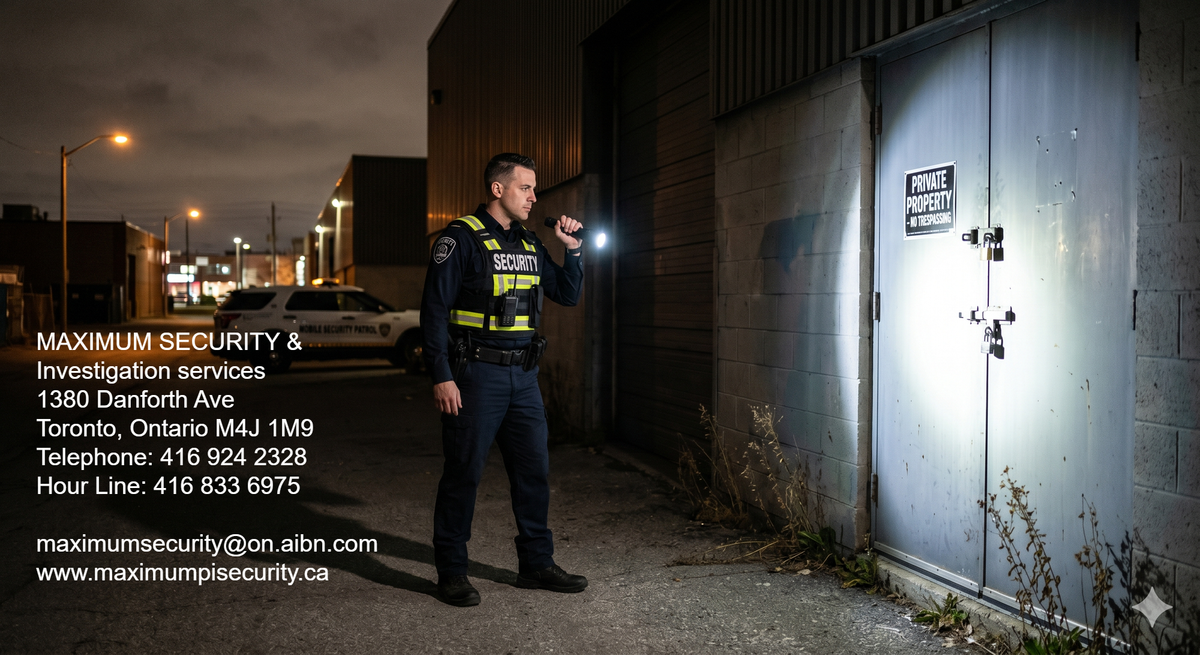
The inspection begins at the absolute outer boundary of the property. The officer conducts a slow, deliberate sweep of the exterior parking lots, shipping lanes, and fencelines.
- Access Control Verification: The officer physically checks all exterior gates, verifying that heavy-duty padlocks have not been cut or tampered with.
- Vandalism and Graffiti Logging: Fresh graffiti or broken exterior glass is an immediate indicator that the property is being scouted by local gangs or urban explorers. The officer photographs any new damage for immediate remediation, as rapid repair is critical to maintaining the illusion of active management.
- Illegal Dumping: Vacant parking lots frequently become dumping grounds for residential contractors looking to avoid municipal waste fees. The officer inspects the lots and rear garbage enclosures for hazardous materials or combustible debris that could pose a fire risk.
2. Physical Point-of-Entry Integrity Tests
Visual confirmation is never enough. The officer must physically exit their vehicle to conduct manual "door pull" tests on critical infrastructure.
- Main Lobbies and Glass Vestibules: The officer physically tests the primary entrance doors, ensuring that heavy chains or deadbolts remain fully seated.
- Rear Shipping Docks: The officer inspects the base of all overhead rolling doors. Thieves frequently use hydraulic jacks to lift these doors just enough to slide underneath. The officer verifies that the doors are flush with the concrete.
- Roof Access Points: The officer ensures exterior fire escape ladders and roof access hatches remain completely secured against copper thieves who attempt to access rooftop commercial HVAC units.
3. The Interior Environmental and Security Sweep
If mandated by the insurance policy, the officer utilizes retained master keys to enter the dark, vacant building to execute an interior environmental audit.
- Plumbing and Water Verification: The officer executes a targeted sweep of the primary washrooms, boiler rooms, and overhead fire sprinkler mains, aggressively looking for pooled water, active leaks, or the distinct smell of mold.
- Temperature and HVAC Audits: During winter months, the officer checks interior thermostats to ensure the building is maintaining the minimum required temperature (usually above 10°C / 50°F) to prevent pipes from freezing, a critical requirement of most vacancy insurance clauses.
- Squatter Eviction and Biohazard Sweeps: The officer sweeps interior offices and basements for signs of illicit sheltering, such as sleeping bags, drug paraphernalia, or discarded food wrappers.
Commercial Procurement: Sourcing Verified Guarding in Mississauga
Acquiring professional mobile patrol coverage for a vacant real estate portfolio requires a realistic understanding of commercial agency pricing structures across Peel Region. Property holding groups cannot evaluate security proposals based on minimum-wage expectations. A legitimate, compliant security agency must operate under the strict guidelines of the Private Security and Investigative Services Act (PSISA), pricing contracts to cover massive corporate infrastructure, including multi-million-dollar commercial general liability insurance, comprehensive WSIB clearings, and the heavy fuel and maintenance costs associated with running a 24/7 patrol fleet.
For active commercial real estate holding groups and property managers in Mississauga, procurement teams should budget for the following agency bill rates:
- Standard Exterior Vacant Property Check: Billed at $45.00 to $65.00 per individual site visit (CAD). This involves a thorough, documented sweep of the exterior transport yards, high-intensity illumination of all loading docks, physical door pulls on perimeter access points, and a detailed digital timestamp report to satisfy basic insurance mandates.
- Comprehensive Interior/Exterior Vacant Audit: Billed at $60.00 to $85.00 per individual site visit (CAD). This involves the officer utilizing retained grand-master keys to enter the vacant building, execute a full interior sweep, check utility rooms for water leaks, verify minimum temperature requirements, and lock down the exterior gates.
- Dedicated Alarm Response Call-Out: Billed at $65.00 to $95.00 per incident (CAD). If the vacant property maintains an active burglar or fire alarm, this fee covers the rapid emergency dispatch to verify the threat and coordinate with local law enforcement.
Hiring an organization that quotes rates significantly below these commercial baselines is a direct indication that the provider is cutting critical compliance corners. If you hire a cut-rate, unverified security company and they fail to execute the patrols, resulting in a denied insurance claim after a catastrophic fire, your real estate group will bear 100% of the devastating legal liability. To understand how to properly vet B2B vendors, reviewing our corporate guide on random mobile guard checks for corporate buildings in Vaughan is an essential step for any operations director.
If your Mississauga warehouse, vacant retail storefront, or transitional office building requires an unyielding line of defense to maintain insurance compliance, establishing professional protection is straightforward. Property managers can easily connect with verified B2B vendors to request a custom security quote from Maximum PI Security to deploy certified mobile personnel, secure massive empty properties, and protect valuable commercial assets against severe neglect.
Legal Realities: Managing Squatters and the Trespass to Property Act
Deploying a professional security service provides massive legal liability protection when dealing with the most dangerous aspect of vacant property management: aggressive squatting.
When a commercial building sits empty, it frequently attracts individuals seeking shelter, particularly during the harsh Canadian winters. If a squatter is allowed to remain on the property for an extended period, evicting them becomes legally complex, and the property owner assumes massive liability if the squatter is injured on the premises due to structural hazards.
Under the Ontario Trespass to Property Act (TPA), a licensed security guard acts as an official representative of the property owner. During their routine interior or exterior sweeps, if an officer discovers individuals camping in the rear loading dock or sleeping inside the building, they have the explicit legal power to approach the individuals and issue a formal trespass warning.
Professional guards utilize advanced verbal de-escalation training to handle these situations respectfully and safely, issuing a clear command to vacate the private property immediately. If the individuals refuse to leave, the guard will retreat to a safe distance, lock down the perimeter, and dispatch the Peel Regional Police to execute a formal, police-led removal. This proactive, regular enforcement prevents homeless encampments from establishing roots on your property, protecting your real estate asset from severe biohazard contamination and structural fires. For logistics operators looking to apply similar perimeter strategies, exploring mobile security patrol services for industrial parks in Mississauga offers highly relevant tactical frameworks.
Nitty-Gritty Vacant Property Realities
How do I stop thieves from stealing the copper wire right out of the building walls?
Copper theft is incredibly aggressive and fast. To stop it in a vacant building, you must implement a "defense in depth" strategy. First, ensure the municipal water main and primary electrical breakers are entirely shut off (unless required for heating). Second, heavy-duty steel puck locks must be installed on all exterior utility panels. Finally, the randomized mobile patrol is your active deterrent. Thieves require hours of uninterrupted time to strip a building. When a marked security vehicle arrives at unpredictable intervals throughout the week, the risk becomes too high, and the thieves will abandon your building for an easier, completely neglected target.
What should the patrol officer do if they discover a massive water leak in the basement?
Mobile patrol officers act as a critical early-warning system for catastrophic environmental failures. If an officer enters a vacant building and discovers a burst pipe actively flooding the basement, their strict protocol is immediate escalation. The officer will instantly notify their 24/7 centralized dispatch desk and trigger the corporate property manager’s emergency contact matrix. The officer will attempt to locate the primary water shut-off valve if safe and accessible, document the extent of the flooding with high-resolution photos, and remain on-site to grant access to emergency plumbing contractors.
Can a security guard place a physical boot on an unauthorized transport truck parked in my vacant lot?
No. Security guards in Ontario are not legally permitted to use physical parking boots or wheel clamps to hold a vehicle hostage. However, if your vacant lot is properly registered with the City of Mississauga and displays compliant parking enforcement signage, the licensed security guard acting as your authorized agent can legally issue private property parking infractions, or they can coordinate directly with licensed local towing operators to physically remove the unauthorized vehicles from your property at the vehicle owner's expense.

Frequently Asked Questions
How often does my insurance company require the vacant property to be inspected?
Inspection frequencies are explicitly defined in your specific commercial insurance policy under the vacancy endorsement. While requirements vary by carrier and building type, the most common mandates in Ontario require a documented physical inspection every 48 to 72 hours. You must confirm this exact frequency with your insurance broker and ensure your mobile patrol contract perfectly aligns with the requirement.
Do I need to keep the electricity and heating on in a vacant building?
In most cases, yes. To prevent commercial sprinkler systems and residual plumbing pipes from freezing and bursting during the winter, property managers must maintain a minimum ambient temperature (typically around 10°C / 50°F). Maintaining electricity is also essential to keep the central burglar alarm, fire panel, and exterior security lighting fully operational.
What is the difference between an unmonitored alarm and a guard response?
An unmonitored alarm simply rings a loud bell on the side of the building, which is entirely useless for a vacant property located in an empty industrial park. A monitored alarm dials a central station, which then dispatches your contracted mobile patrol guard. The guard arrives, physically verifies if a break-in occurred, secures the building, and provides a verified report to the police, ensuring rapid law enforcement intervention.
About the Author
Jeff Calixte is an online exclusive content sell strategist with a deep background in tracking local asset protection data, analyzing Southern Ontario labor rates, and outlining real operational deployment structures across the Greater Toronto Area.
Sources
- Ontario Ministry of the Solicitor General - Private Security and Investigative Services Act Regulations
- Trespass to Property Act, R.S.O. 1990, c. T.21
- Peel Regional Police - Commercial Property Protection and Vacant Property Advisories
Note
Job availability, wages, and hiring conditions can vary widely by province, employer, season, and experience level. All salary ranges and job examples in this guide are estimates based on current labour market data. Always confirm details directly with the employer before applying.