Visible Uniformed Deterrents for High-Shrinkage Stores in Downtown Toronto
Bold daytime shoplifting is decimating margins for Downtown Toronto convenience and electronics retailers. Discover the commercial guarding rates and visible uniformed deterrent strategies required to stop high-shrinkage retail crime.
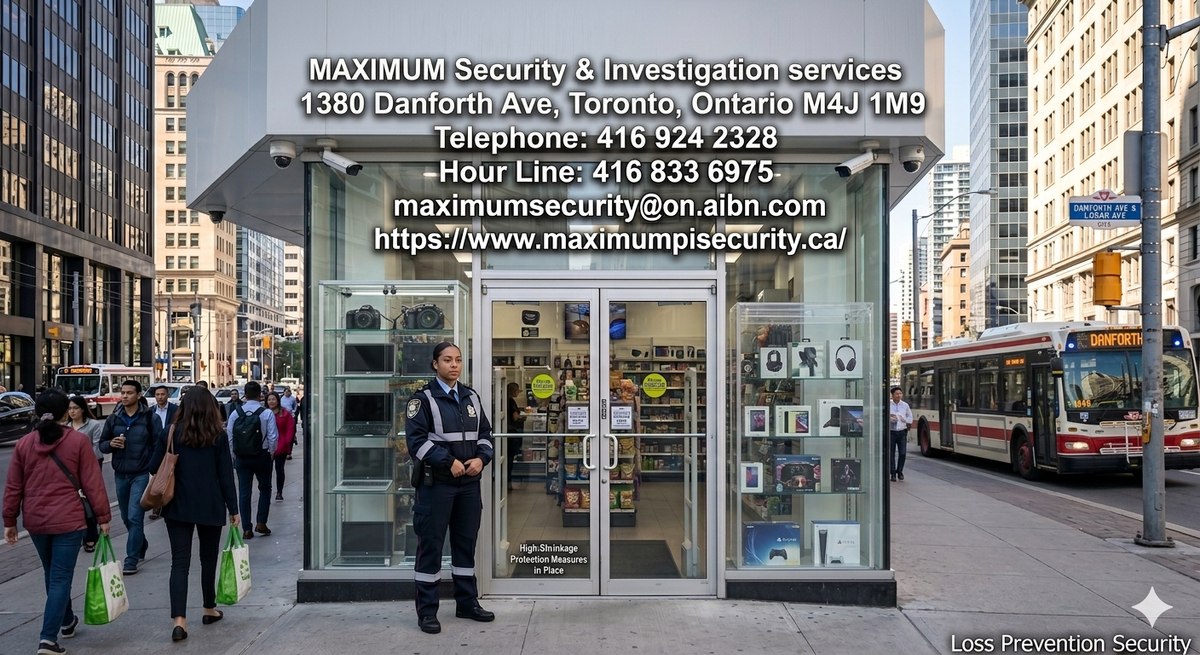
Operating a high-volume convenience store, independent pharmacy, or specialty electronics retailer in Downtown Toronto—whether situated along the heavy pedestrian corridors of Yonge Street, the dense intersections of Queen and Spadina, or the bustling transit hubs near Union Station—is becoming increasingly difficult. While these premium urban locations offer incredible daytime foot traffic, they also expose retail operators to an unprecedented wave of high-shrinkage retail crime. In 2026, the profile of downtown retail theft has shifted dramatically. Store owners are no longer dealing with covert shoplifters attempting to discreetly pocket a single item; they are facing bold, brazen daytime offenders and organized retail crime (ORC) syndicates who simply walk into a store, sweep entire shelves of high-value merchandise into duffel bags, and walk right out the front door in broad daylight.
For convenience and electronics retailers, relying on legacy security measures—such as passive overhead CCTV cameras, public view monitors, or electronic door buzzers—provides absolutely zero deterrence against these brazen daylight incursions. Thieves know that retail staff are strictly forbidden from intervening, and they know that police response times for non-violent property theft cannot match their two-minute exit strategy. Stopping this aggressive daytime bleeding requires an immediate, undeniable physical barrier. Deploying visible uniformed deterrents—specifically, highly trained, professional security guards stationed directly at the point of entry—allows downtown retailers to instantly reclaim their sales floors, protect their front-line staff, and completely neutralize the psychological opportunity that brazen shoplifters rely on.
The Anatomy of Bold Daytime Retail Crime in Downtown Toronto
High-shrinkage stores—specifically those selling easily liquidated goods like energy drinks, premium cosmetics, over-the-counter medications, and high-end consumer electronics—are targeted because their inventory is highly accessible. Modern daytime thieves operate with a sense of total impunity. They do not care if their face is captured on a 4K security camera because they know that video footage alone rarely results in an immediate arrest or the recovery of the stolen merchandise.
Consensus Analysis: Locking Inventory vs. Active Uniformed Deterrence
When downtown retail managers attempt to stop severe daytime shrinkage, they frequently debate whether to lock all high-value items behind protective glass cases or to invest in an active, physical human deterrent at the front door.
The Verdict:
- Avoid This: Locking all consumer electronics, hygiene products, and premium convenience items behind plexiglass cabinets that require a staff member to unlock. While this physically stops theft, it utterly destroys the retail customer experience. Legitimate downtown shoppers are in a rush; if they have to wait five minutes for a cashier to unlock a case just to buy a phone charger or a bottle of vitamins, they will simply leave and buy it online. This "defensive merchandising" strategy often hurts total sales volumes more than the shrinkage itself.
- Buy This: Station a crisp, highly visible uniformed security guard directly at the primary storefront entrance. A physical guard provides immediate, dynamic deterrence without locking down your inventory. When an organized retail thief or an opportunistic shoplifter approaches your store and sees a professional, authoritative guard making direct eye contact with every entrant, the perceived risk of the theft skyrockets. The thief will almost universally bypass your store and target an unsecured retailer down the street.
Deep Dive: Calculating the True Financial Cost of High Shrinkage
The economic devastation caused by bold, high-volume daytime theft extends exponentially past the direct wholesale invoice of the stolen merchandise. When a downtown convenience or electronics retailer is repeatedly targeted in broad daylight, the operational health and safety of the entire business collapses.
If your front-line retail staff are forced to helplessly watch thieves sweep shelves on a daily basis, they will feel completely unsupported and unsafe. This leads to massive employee turnover, forcing corporate HR to spend thousands of dollars continuously recruiting and onboarding replacement cashiers. Furthermore, honest customers who witness brazen daytime theft often feel extremely uncomfortable and unsafe; they will alter their shopping habits and take their daily business to a competing, secure retailer, resulting in a permanent drop in your daily legitimate transaction volume.
| High-Shrinkage Loss Component | Unsecured Downtown Storefront | Fortified Uniformed Guard Layout |
| Direct Daytime Inventory Loss (Monthly) | $6,500 - $14,000 (CAD) | $0.00 (Theft Deterred) |
| Lost Sales Due to Locked/Defensive Displays | $4,000 - $8,500 (CAD) | $0.00 (Open, Accessible Merchandising) |
| Front-Line Staff Turnover & Recruitment | $4,500 (CAD per quarter) | $0.00 (Safe, Supported Workplace) |
| Customer Attrition (Lost Daily Foot Traffic) | Estimated 12% drop in sales | $0.00 (Maintained Consumer Trust) |
| Total Estimated Financial Impact | $15,000 - $27,000+ (CAD) | $0.00 |
By deploying a professional, visible security presence, retail owners transform their storefront from a soft target into a hardened asset. This targeted investment is mathematically superior to absorbing the compounding, devastating losses generated by unchecked daytime theft. Retail operators looking to understand how these procurement principles scale across different commercial environments should review our foundational manual on 2026 construction site security guidelines for GTA contractors to verify baseline risk management workflows that apply across all corporate properties.
Engineering an Active Storefront Defense Strategy
Eliminating bold daytime retail crime in a high-density downtown environment requires a strategic, procedural security layout that actively controls the front entrance while supporting the customer service staff on the floor.
1. The "First-Impression" Entrance Deterrent
For high-shrinkage convenience stores and urban electronics retailers, the security guard cannot be wandering aimlessly in the back aisles. Your primary security asset must be stationed directly inside the main entrance vestibule, maintaining a highly visible, outward-facing posture.
The guard must execute proactive "greet and observe" tactics. By making immediate, polite eye contact and offering a brief greeting to every single person who crosses the threshold, the guard shatters the anonymity that daytime thieves rely on. This interaction silently communicates: “I see you, I know you are here, and this store is actively protected.” If a known, repeat offender or a scout for an ORC group realizes they have been instantly identified, they lose the element of surprise and will immediately abort their theft plan. For luxury or specialized locations looking to adapt these concepts, incorporating the protocols in our guide on uniformed loss prevention guards for luxury retail in Yorkville provides excellent context for premium storefront protection.
2. Tactical Positioning for Electronics vs. Convenience Layouts
The deployment strategy for your uniformed guard must adapt to the specific layout of your retail operation:
- Convenience & Pharmacy Retail: The highest shrinkage items (energy drinks, allergy medication, premium cosmetics) are often located deep in the aisles. The guard must maintain a static overwatch near the front door to prevent "grab-and-run" tactics where a thief loads a basket and sprints out the entrance. The guard acts as a physical chokepoint.
- Electronics Retail: High-value items (headphones, smart home devices, gaming accessories) are frequently displayed near the front of the store to attract foot traffic. Here, the guard must actively patrol the "hot zones," standing within arm's reach of the premium displays to physically deter individuals attempting to cut security tethers or pry open display hooks.
3. De-Escalation and Front-Line Staff Protection
Despite the highest levels of visual deterrence, aggressive individuals or individuals under the influence may still attempt to cause a disturbance in a downtown retail environment. When a critical incident occurs near the cash wrap, a highly trained uniformed guard utilizes advanced tactical de-escalation techniques.
The primary directive is the absolute physical safety of the retail cashiers and the honest customers, not engaging in a physical brawl over a $50 electronic accessory. The guard uses non-threatening body language and authoritative verbal commands to create a physical barrier between the aggressor and the store staff. They contain the situation, safely guide legitimate customers away from the confrontation, and instantly trigger a direct police dispatch if the suspect becomes violent. This measured, professional response prevents catastrophic physical injuries and shields the retail brand from severe civil liability.
Sourcing Verified Commercial Guarding in Downtown Toronto
Acquiring professional security guard coverage for a high-shrinkage downtown storefront requires a realistic understanding of commercial agency pricing structures across Southern Ontario. Retail operations managers cannot evaluate security proposals based on basic minimum-wage expectations. In the 2026 Ontario market, a legitimate, compliant security agency must operate under the strict guidelines of the Private Security and Investigative Services Act (PSISA), pricing contracts to cover extensive corporate overhead, including multi-million-dollar commercial general liability insurance, WSIB clearings, and rigorous conflict-de-escalation training for all deployed guards.
For active convenience stores, pharmacies, and electronics retailers across Downtown Toronto, corporate procurement teams should budget for the following agency bill rates:
- Static Uniformed Retail Guard (Tier 1): Billed at $38.00 to $48.00 per hour (CAD). This involves a highly visible, authoritative guard deployed specifically for high-traffic daytime shifts, executing front-door access control, continuous floor observation, and providing immediate support to cashiers during aggressive customer encounters.
- Elite Loss Prevention Specialist (Tier 2): Billed at $45.00 to $58.00 per hour (CAD). This involves a guard with advanced legal arrest training deployed inside larger downtown electronics retailers to actively interdict sophisticated theft rings and manage complex criminal code arrests before suspects can clear the exits.
- Randomized Mobile Vehicle Patrol (Tier 3): Billed at $45.00 to $75.00 per individual site check (CAD). This option provides unpredicted, thoroughly documented exterior sweeps for your storefront and rear loading doors after closing hours, presenting an outstanding defense against late-night smash-and-grabs.
Hiring an organization that quotes rates significantly below these commercial baselines—such as $22.00 to $25.00 per hour—is a direct indication that the provider is utilizing untrained personnel, operating without WSIB clearance, or failing to carry proper commercial liability insurance. If an uninsured, poorly trained guard improperly detains a shopper or injures someone in your downtown store, your corporate entity will bear 100% of the devastating legal liability. To understand how to properly vet B2B vendors, reviewing our corporate guide on loss prevention strategies for shopping centers in Markham is an essential step for any operations director.
If your high-shrinkage convenience store, commercial pharmacy, or specialty electronics retailer in Downtown Toronto requires an unyielding line of defense to eliminate daytime theft, establishing professional protection is straightforward. Retail operators can easily connect with verified B2B vendors to request a custom security quote from Maximum PI Security to deploy certified personnel, secure primary entrances, and protect valuable commercial assets against bold daytime threats.
Legal Realities: The Trespass to Property Act and Citizen's Arrests
Deploying private security guards within a fast-paced urban retail environment requires absolute adherence to Canadian law and provincial regulations to protect the business from severe civil lawsuits.
For daytime retail operations, the Ontario Trespass to Property Act (TPA) is the most powerful tool in the security guard's arsenal. This provincial legislation allows your contracted guard to approach individuals who are aggressively loitering inside the store, harassing customers, or displaying pre-theft behaviors, and formally demand they leave the premises. Furthermore, if the guard recognizes a known, repeat shoplifter walking through the front door, they can utilize the TPA to immediately deny them entry and formally ban them from the property. Enforcing the TPA effectively removes problematic individuals from your storefront before they ever have the opportunity to commit a theft.
If a theft does occur, guards operate under section 494 of the Criminal Code of Canada, which allows them to execute a citizen's arrest. However, to legally execute an arrest for shoplifting, the security guard must maintain continuous, uninterrupted surveillance of the suspect to establish five distinct legal steps: Selection, Concealment, Continuous Observation, Failure to Pay, and Exterior Exit. If a guard loses sight of the suspect for even a moment, executing an arrest introduces massive legal liabilities. Sourcing security through a verified firm adhering to these strict legal baselines is a fundamental risk-management step. For independent businesses looking to manage internal staff liabilities alongside external threats, reviewing our guide on how visible retail guards reduce employee theft in downtown Toronto provides excellent operational context.
Nitty-Gritty Store Security Realities
What happens if a brazen shoplifter pulls out a weapon, like a knife or bear spray?
This is the precise reason retail owners must never instruct their cashiers or stock staff to intervene in a theft. If a shoplifter escalates the situation by deploying a weapon or threatening violence, the theft instantly upgrades from a property crime to an armed robbery. The security guard’s strict, uncompromising protocol is "Life Safety First." The guard will immediately cease any attempt to recover the merchandise, create physical distance, instruct staff and customers to retreat, and instantly dial 911 to dispatch the Toronto Police Service. A $100 electronics accessory is never worth a violent physical altercation or a WSIB injury claim.
Can a uniformed guard legally search a customer's oversized backpack before they leave the store?
No. Under Canadian law, a security guard cannot physically force a customer to open a personal bag without explicit consent or a lawful arrest warrant following a witnessed theft. However, downtown retailers can implement a highly effective "Condition of Entry" policy, clearly posted at the front door, stating that all oversized bags and backpacks must be left with the security guard at the front entrance prior to shopping. If a customer refuses to check their bag, the guard can legally deny them entry under the Trespass to Property Act.
How does a guard handle an aggressive panhandler blocking the store entrance?
Downtown Toronto storefronts frequently deal with aggressive panhandling directly outside their automatic doors, which heavily deters legitimate paying customers from entering. While the guard cannot enforce the TPA on public city sidewalks, their visible, authoritative physical presence standing directly inside the glass doors almost always forces the panhandler to move down the street to a softer, unmonitored storefront. If the individual steps onto the private property footprint (the vestibule or store interior), the guard will immediately and professionally execute a formal trespass removal.

Frequently Asked Questions
Why do convenience and electronics stores face higher daytime shrinkage than clothing stores?
Convenience stores and electronics retailers sell items that are highly standardized, broadly appealing, and incredibly easy to liquidate. A stolen designer dress requires a specific buyer, but stolen energy drinks, premium razor blades, or sealed smartphone accessories can be instantly resold for cash to gray-market corner stores or listed on online classifieds within minutes, making them the ultimate target for fast-cash theft rings.
Should we use plainclothes loss prevention or highly visible uniformed guards?
For high-shrinkage downtown stores suffering from bold, daytime "grab-and-run" theft, a highly visible, uniformed security guard is absolutely the optimal choice. Plainclothes officers are designed to catch discreet thieves after the theft has occurred, which involves letting the merchandise leave the shelf. A visible uniformed guard serves as an immediate visual deterrent that stops the brazen shoplifter before they even attempt to grab the item, ensuring your shelves stay stocked and your staff feel safe.
Do security guards help with customer service during busy downtown lunch rushes?
Yes. A professional, Tier 1 commercial security guard operates as a highly effective extension of your customer service team. During frantic downtown lunch rushes or evening commutes, the guard assists by directing customer flow, answering basic directional questions, and ensuring that lines move efficiently, which allows your retail cashiers to focus entirely on ringing up transactions quickly and accurately.
About the Author
Sources
- Criminal Code of Canada, R.S.C. 1985, c. C-46 - Section 494 Arrest Standards
- Ontario Ministry of the Solicitor General - Private Security and Investigative Services Act Regulations
- Trespass to Property Act, R.S.O. 1990, c. T.21
Note
Commercial bill rates, guard wages, deployment conditions, and vendor availability can vary widely by province, municipality, season, and project scope. All pricing estimates, labor figures, and career examples in this guide are approximations based on current Ontario market data. Always confirm contract details, licensing compliance, and specific rate quotes directly with your chosen service provider or employer before finalizing any agreements.