Uniformed Loss Prevention Guards for Luxury Retail in Yorkville
High-end boutiques and jewelers in Yorkville require more than standard security. Discover the commercial guarding rates and elite corporate-uniformed loss prevention strategies designed to protect Toronto's most exclusive luxury retail corridor.
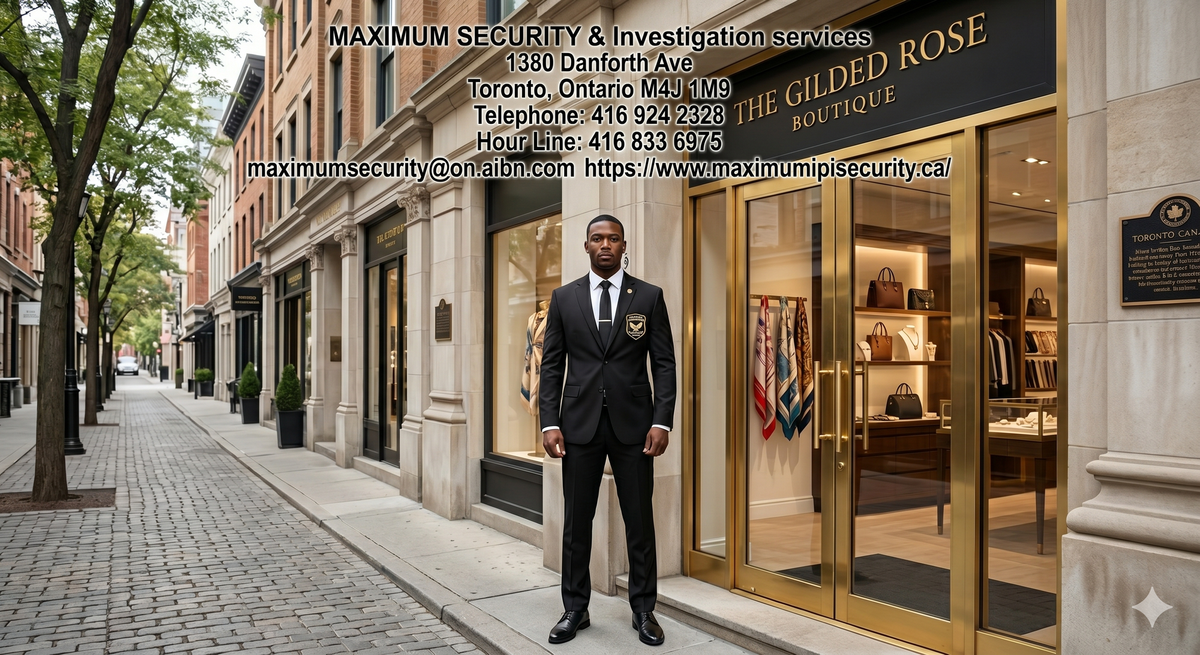
Operating a high-end apparel boutique, designer flagship, or premier jewelry store in Toronto’s exclusive Yorkville neighborhood—spanning Bloor Street West, Cumberland Street, and Yorkville Avenue—presents an entirely unique set of asset protection challenges. Yorkville is the undisputed epicenter of Canadian luxury retail, attracting high-net-worth clientele, international tourists, and A-list celebrities. However, the exact factors that make this corridor so lucrative—a dense concentration of ultra-expensive, highly liquid inventory—also make it the primary target for sophisticated Organized Retail Crime (ORC) syndicates, international theft rings, and targeted smash-and-grab operations.
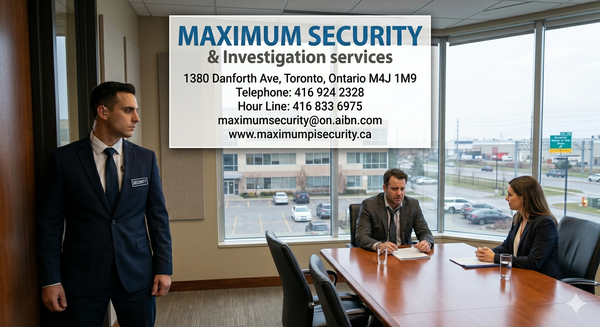
For a luxury retail director or boutique manager in Yorkville, standard security solutions are completely unacceptable. You cannot deploy an under-trained guard in a wrinkled tactical uniform to stand outside a storefront that sells $10,000 handbags or bespoke timepieces; doing so instantly degrades the premium customer experience and damages the brand's carefully curated aesthetic. Protecting a luxury footprint requires a specialized "concierge-style" approach to loss prevention. Deploying elite, corporate-uniformed security guards—often outfitted in tailored black suits—allows high-end retailers to establish an unyielding, highly trained physical deterrent that blends seamlessly into the luxury shopping environment while aggressively neutralizing sophisticated theft attempts.
The Financial and Aesthetic Reality of Luxury Retail Shrinkage
Inventory shrinkage in the luxury sector operates on a completely different financial scale than standard commercial retail. A single successful theft incident in Yorkville does not result in the loss of a $40 cosmetic item; it results in the loss of a $15,000 designer watch or a highly limited-edition leather good.
Consensus Analysis: Plainclothes LPOs vs. High-End Corporate-Uniformed Guards
When international luxury brands outline their annual Canadian security budgets, corporate directors frequently debate whether to deploy invisible, plainclothes Loss Prevention Officers (LPOs) or highly visible, corporate-uniformed guards.
The Verdict:
- Avoid This: Relying exclusively on plainclothes LPOs to protect a luxury boutique. Plainclothes officers are designed to catch shoplifters after the theft has occurred. In the luxury sector, allowing a sophisticated thief to lay hands on a high-value item and attempt an exit creates an unacceptable risk of inventory damage, high-speed foot pursuits through Yorkville, and physical danger to your VIP clientele.
- Buy This: Station an elite, corporate-uniformed guard (the "black suit" model) directly at the primary entrance and central display cases. A sharp, physically imposing guard in a tailored suit acts as an immediate, premium visual deterrent. Highly organized retail thieves calculate risk before entering; when they identify an alert, highly professional guard monitoring the door, they abandon the target. This proactive deterrence stops the crime before the inventory is ever touched.
Deep Dive: Calculating the True Overhead of Luxury Storefront Crime
The economic devastation caused by a theft incident in a Yorkville boutique extends far past the direct wholesale invoice of the stolen designer merchandise. Luxury brands spend millions of dollars meticulously engineering a serene, exclusive, and safe shopping environment for their VIP clients.
If a luxury boutique becomes known as a target for aggressive ORC "steaming" tactics (flash mobs) or violent smash-and-grabs, the brand's reputation suffers catastrophic damage. High-net-worth clients will simply refuse to shop at a location where they feel their personal safety is compromised. Furthermore, luxury retail staff are highly specialized professionals who handle intense client relationships. If staff feel unsafe due to recurring theft attempts, they will resign, forcing the brand to spend tens of thousands of dollars recruiting and retraining specialized brand ambassadors.
| Luxury Loss Component | Unsecured Yorkville Boutique | Fortified Corporate Guard Layout |
| Direct Inventory Asset Loss (Per Incident) | $10,000 - $45,000+ (CAD) | $0.00 (Theft Deterred) |
| Premium Staff Turnover & Re-Hiring | $15,000 (CAD) | $0.00 (Stable, Secure Workplace) |
| Emergency Display Glass Remediation | $5,000 - $12,000 (CAD) | $0.00 (No Vandalism Sustained) |
| Loss of VIP Client Foot Traffic | Severe structural revenue threat | $0.00 (Maintained Exclusivity) |
| Total Estimated Financial Impact | $30,000 - $72,000+ (CAD) | $0.00 |
By deploying a premium, third-party security presence, luxury retailers immediately signal that the boutique is actively managed to the highest international standards. This investment is mathematically superior to absorbing the devastating, compounding losses generated by an unprotected luxury storefront. For retail operators looking to understand how these procurement principles scale across different commercial environments, reviewing our foundational manual on loss prevention strategies for shopping centers in Markham provides excellent context on establishing baseline risk management workflows.
Engineering an Elite Luxury Loss Prevention Blueprint
Eliminating organized retail crime in a high-end boutique requires a strategic, highly polished security layout that closes operational loopholes while elevating the overall customer experience.
1. The "Concierge" Deterrent: Access Control and Greeting
In the Yorkville luxury market, the security guard serves a dual role: elite asset protector and brand ambassador. Your primary guard must be stationed directly at the front entrance vestibule. Their first duty is access control—many high-end jewelers and designer flagship stores utilize "locked door" policies, where the guard must physically evaluate and buzz in every single client.
The guard greets clients with absolute professionalism, opens the door, and directs them to an available sales associate. This immediate interaction serves a dual purpose: it provides the VIP client with a premium, white-glove experience, while simultaneously allowing the guard to execute a rapid, covert behavioral assessment of the visitor. By making immediate eye contact and acknowledging every person who enters, the guard shatters the anonymity that professional retail thieves rely on, forcing bad actors to reconsider their operational plans immediately.
2. High-Value Merchandise Escorts and Static Observation
Inside a luxury boutique, certain transactions require moving extremely high-value inventory—such as a tray of diamond timepieces or a $50,000 bespoke necklace—from a secure backroom vault to the public sales floor. During these vulnerable transit windows, the corporate-uniformed guard transitions into a static overwatch position.
The guard positions themselves strategically near the presentation table, maintaining a wide field of view. They are trained to monitor the surrounding environment for "distraction teams"—accomplices who intentionally create a loud disturbance on the other side of the store to draw attention away from the primary thief. By maintaining disciplined focus strictly on the high-value transaction, the guard completely neutralizes these sophisticated ORC distraction techniques. For operations seeking specialized guarding models to protect premium retail environments during late-night closing buffers, incorporating the protocols in our guide on night security guards for strip malls in Richmond Hill provides excellent context for structuring holistic after-hours protection.
3. Tactical De-Escalation and Incident Containment
Despite the highest levels of deterrence, bold ORC groups or aggressive individuals may still attempt to breach a luxury storefront. When a critical incident occurs on the sales floor, a highly trained "black suit" guard utilizes advanced tactical de-escalation techniques.
The primary directive in a luxury environment is the absolute physical safety of the staff and the clientele, not the immediate physical wrestling of a suspect. The guard uses non-threatening body language and authoritative verbal commands to contain the situation quickly. If a flash-mob-style theft occurs, the guard’s protocol is to safely guide clients into secure backrooms, lock down the front perimeter doors if safe to do so, and instantly trigger a direct panic alarm to dispatch the Toronto Police Service. This measured, professional response prevents catastrophic physical injuries and shields the luxury brand from severe civil liability.
Sourcing Elite Corporate Guarding in Downtown Toronto
Acquiring elite, corporate-uniformed security guard coverage for a Yorkville boutique requires a realistic understanding of premium commercial agency pricing structures across Southern Ontario. Luxury retail directors cannot evaluate security proposals based on standard minimum-wage expectations. To field a guard capable of wearing a tailored suit, delivering white-glove customer service, and executing advanced threat assessments, a legitimate security agency must recruit from the top 5% of the industry. In the 2026 Ontario market, compliant security agencies price these premium contracts to cover extensive corporate overhead, intensive use-of-force and customer-service training, and multi-million-dollar commercial liability insurance policies.
For active luxury boutiques and designer flagship stores across Yorkville, corporate procurement teams should budget for the following agency bill rates:
- Elite Corporate-Uniformed Guard / Black Suit (Tier 2): Billed at $45.00 to $58.00 per hour (CAD). This involves a highly polished, articulate guard equipped with a tailored black suit. They execute front-door access control, white-glove client greetings, and continuous, low-profile floor observation to deter ORC syndicates.
- Covert Luxury Loss Prevention Specialist (Tier 2+): Billed at $50.00 to $65.00 per hour (CAD). This involves a plainclothes operative with advanced legal arrest training deployed inside massive, multi-level luxury department stores to conduct covert internal investigations and interdict highly sophisticated theft rings without disrupting the VIP shopping experience.
- Specialized High-Value Transport Escort (Tier 3): Billed at $65.00 to $90.00 per hour (CAD). This involves specialized, highly tactical personnel (often off-duty law enforcement or specialized tactical guards) utilized strictly for the secure transport of ultra-high-value inventory between regional vaults and the Yorkville storefront.
Hiring an organization that quotes rates significantly below these commercial baselines is a direct indication that the provider is utilizing under-trained, entry-level personnel who will severely damage your luxury brand’s image and leave your boutique legally exposed during an incident. To understand how to properly vet B2B vendors and avoid massive legal liabilities, reviewing our corporate guide on hiring uniformed security guards for retail plazas in Brampton is an essential step for any luxury operations director.
If your high-end apparel boutique, designer flagship, or premier jewelry store in Yorkville requires an unyielding, premium line of defense to eliminate inventory shrinkage, establishing professional protection is straightforward. Retail operators can easily connect with verified premium vendors to request a custom security quote from Maximum PI Security to deploy elite corporate personnel, execute unbiased access control, and secure valuable commercial assets against sophisticated threats.
Legal Realities and Compliance Under the PSISA
Delegating access control and loss prevention duties to a licensed, third-party security agency provides massive liability protection for your luxury retail corporation. If an internal store manager or an untrained sales associate physically blocks a client, accuses them of theft improperly, or detains them without absolute legal proof, the client can immediately file a devastating, highly public civil lawsuit for defamation, discrimination, and false imprisonment against your brand.
By utilizing a professional guard licensed under the Private Security and Investigative Services Act (PSISA), the entire loss prevention process is formalized, objective, and legally insulated. Licensed security guards are trained in the exact legal parameters of section 494 of the Criminal Code of Canada regarding citizen's arrests. They understand the strict five-step legal requirements necessary to establish a lawful shoplifting arrest: Selection, Concealment, Continuous Observation, Failure to Pay, and Exterior Exit. By strictly adhering to these operational protocols, the guard ensures that all interactions remain respectful, legally compliant, and thoroughly documented, protecting your core luxury brand from severe legal exposures. For boutiques dealing with specific internal staff liabilities, reviewing our guide on how visible retail guards reduce employee theft in downtown Toronto provides excellent context on managing full-spectrum, unbiased loss prevention.
Nitty-Gritty Luxury LP Realities
Can a luxury retail guard legally refuse entry to someone based on their appearance?
Under the Ontario Human Rights Code, a business cannot refuse entry to an individual based on race, gender, age, or socioeconomic status. A "locked door" buzzer policy must be applied consistently. A security guard can legally deny entry to an individual who is overtly intoxicated, displaying highly aggressive behavior, wearing items designed to conceal their identity (like full ski masks), or who has been previously issued a formal Notice of Trespass under the Trespass to Property Act. The guard must execute access control based on specific, objective behavioral risks, not subjective aesthetic profiling.
What is the specific operational protocol for a "smash-and-grab" using hammers?
If an organized crew enters a Yorkville jewelry store and immediately begins smashing display cases with heavy hammers, standard arrest protocols are instantly suspended. The guard will absolutely not engage in hand-to-hand combat against a group armed with blunt weapons. The strict protocol is "Life Safety First." The guard will immediately verbally command all staff and VIP clients to drop to the floor or retreat to the secure backroom vault. The guard will press the silent hold-up alarm, secure the interior staff doors, and actively record physical descriptions and tactical movements to hand directly to the Toronto Police Service Major Crime unit upon their arrival.
Are guards allowed to carry handcuffs in a luxury retail environment?
Yes. Licensed security guards in Ontario are legally permitted to carry and utilize handcuffs, provided they have successfully completed an accredited, formal Use of Force and Handcuffing certification program. However, in a luxury retail setting, handcuffs are only deployed as an absolute last resort if a lawfully arrested suspect becomes violently combative and poses a direct physical threat to the staff, the public, or the guard. Corporate protocol dictates that suspects are verbally contained in a secure administrative office until police arrive whenever possible.
Frequently Asked Questions
Why do organized retail crime groups target Yorkville boutiques instead of larger malls?
Yorkville boutiques are highly targeted because they concentrate massive financial value into very small, easily accessible footprints. Unlike large indoor malls where a thief has to run through hundreds of meters of concourse to escape, Yorkville boutiques have direct street-level exits facing Bloor Street or Cumberland Street, allowing an ORC group to execute a theft and immediately jump into a staged getaway vehicle.
Do corporate-uniformed guards assist with VIP client services?
Absolutely. A premium "black suit" guard operates as an extension of your luxury brand's customer service team. In addition to their security duties, they routinely assist with opening doors, greeting VIP clients by name, managing umbrellas during inclement weather, and discreetly escorting high-net-worth individuals to their private vehicles if requested, providing a seamless, highly secure luxury experience.
Should we utilize undercover loss prevention officers (LPOs) during private VIP events?
Yes. During high-profile trunk shows, product launches, or private VIP evening events, the security dynamic shifts. Your primary corporate-uniformed guards should manage the exterior perimeter and guest list access. Meanwhile, deploying plainclothes LPOs to blend in as guests or catering staff allows your security team to covertly monitor the interior event space for internal theft, uninvited guests, or paparazzi without disrupting the exclusive atmosphere of the party.
About the Author
Jeff Calixte is an online exclusive content sell strategist with a deep background in tracking local asset protection data, analyzing Southern Ontario labor rates, and outlining real operational deployment structures across the Greater Toronto Area.
Sources
- Criminal Code of Canada, R.S.C. 1985, c. C-46 - Section 494 Arrest Standards
- Ontario Ministry of the Solicitor General - Private Security and Investigative Services Act Regulations
- Retail Council of Canada - Retail Secure 2026: Organized Retail Crime Initiatives
Note
Commercial bill rates, guard wages, deployment conditions, and vendor availability can vary widely by province, municipality, season, and project scope. All pricing estimates, labor figures, and career examples in this guide are approximations based on current Ontario market data. Always confirm contract details, licensing compliance, and specific rate quotes directly with your chosen service provider or employer before finalizing any agreements.