Random Perimeter Mobile Patrols for Auto Dealerships in Markham
Auto dealerships in Markham are ground zero for highly organized vehicle theft networks. Discover how randomized perimeter mobile patrols act as the ultimate high-visibility deterrent against overnight lot breaches and key-cloning syndicates.
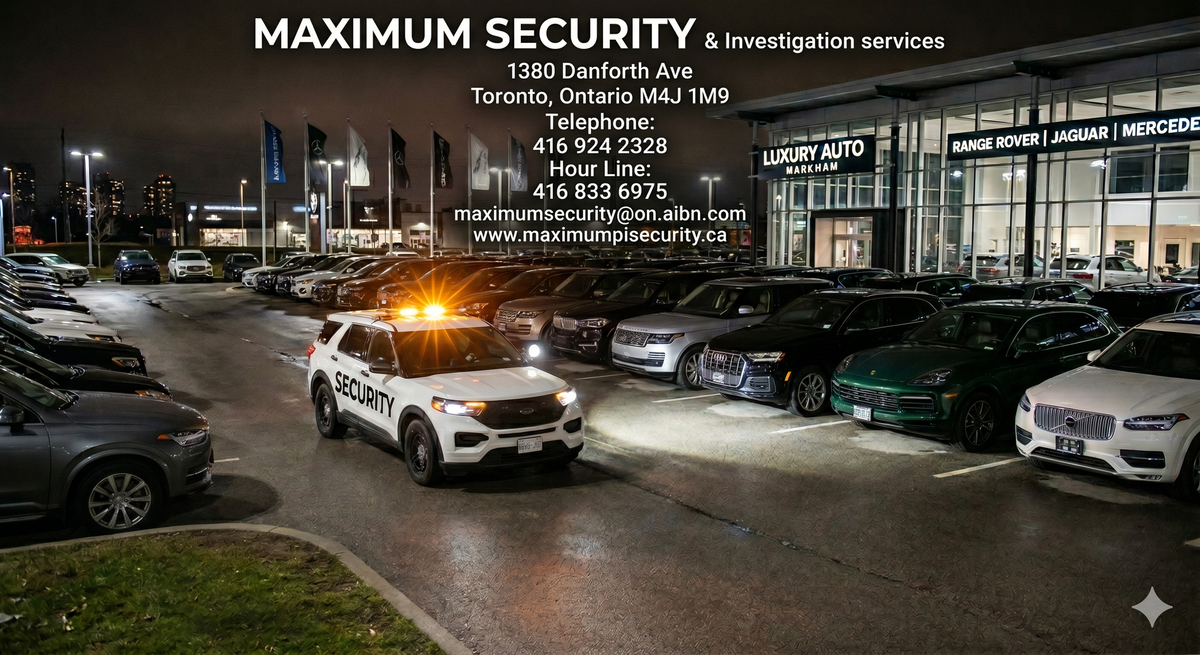
Managing a massive automotive dealership across Markham—whether located along the heavy automotive corridors of Highway 7, Kennedy Road, or the sprawling auto malls near McCowan—places general managers and dealer principals on the absolute front lines of an escalating property crime crisis. Markham, and the broader York Region, has become a primary target zone for highly sophisticated, organized auto theft syndicates. While residential driveway thefts dominate the local news, commercial dealerships face an entirely different scale of threat. Dealerships hold tens of millions of dollars in highly liquid inventory, parked in massive, open-air lots, entirely unstaffed throughout the long overnight hours.
For automotive general managers, relying on traditional security methods—such as perimeter chain-link fences, basic alarm sensors on the showroom doors, or unmonitored security cameras—has proven completely ineffective. Modern auto thieves are not deterred by passive cameras; they simply wear masks, cut the perimeter fence, utilize advanced OBD-port hacking tools to start multiple high-end SUVs, and drive them straight off the lot and into waiting shipping containers before the local police can even be dispatched. To break this devastating cycle of inventory loss, progressive dealership operators are shifting away from passive technology and reinvesting in aggressive, physical human deterrence. Deploying randomized perimeter mobile patrols ensures that massive automotive lots are actively audited, completely disrupting the highly calculated operational timelines of organized theft rings.
The Operational Threat: Organized Auto Theft in Markham
The automotive theft crisis in Markham is largely driven by organized crime rings executing vehicles "made-to-order" for overseas export. Dealerships are uniquely vulnerable because they consolidate massive quantities of the exact vehicles these syndicates target—specifically luxury SUVs, high-end pickup trucks, and premium hybrid models from brands like Lexus, Toyota, and Land Rover.
Consensus Analysis: Remote Camera Monitoring vs. Randomized Mobile Patrols
When dealer principals attempt to secure their massive exterior lots, they frequently debate whether to invest their security budget into advanced artificial intelligence (AI) camera towers or to deploy marked mobile security vehicles.
The Verdict:
- Avoid This: Relying exclusively on pole-mounted remote camera systems without a local human response mechanism. While remote monitoring stations can trigger strobe lights and use two-way audio to yell at trespassers over a loudspeaker, sophisticated thieves know that the voice on the speaker is hundreds of miles away. They know exactly how long it takes for regional police to respond to a property alarm. If a thief only needs three minutes to clone a key fob and drive the vehicle through a cut fence, the camera system simply provides a high-definition recording of your inventory leaving the property.
- Buy This: Implement a dedicated, randomized mobile security patrol protocol. A physical, marked security vehicle equipped with high-intensity alley lights possesses the mobility to aggressively sweep the massive outdoor lot. Because the patrol times are completely randomized, criminal scout teams cannot establish a predictable window to execute their highly technical key-cloning attacks. The immediate, unpredictable presence of a human security officer forces the theft ring to abandon the dealership in favor of a softer, unmonitored target.
The Mathematics of Dealership Asset Loss & The Ironclad Patrol Protocol
The economic devastation caused by a single overnight breach at a Markham auto dealership extends exponentially past the direct invoice cost of the stolen vehicles. Dealership operations run on incredibly tight margins built around inventory floor plan financing, precise customer delivery schedules, and massive commercial insurance policies.
Calculating the True Cost of Overnight Inventory Breaches
When an organized crew targets a dealership, they rarely take just one vehicle. Using advanced relay attacks or OBD (On-Board Diagnostics) port programmers, a crew of three individuals can steal three luxury SUVs worth $90,000 each in under ten minutes. A $270,000 inventory loss overnight triggers a catastrophic operational cascade.
First, the dealership must report the loss to their commercial garage auto policy provider. Due to the extreme volume of auto thefts across Ontario, commercial insurance carriers are aggressively raising premiums, increasing deductibles, and in severe cases of repeated losses, entirely dropping coverage for specific high-risk dealerships. If a dealership loses its floor plan insurance, it literally cannot legally operate or purchase new inventory from the manufacturer.
Secondly, many stolen vehicles are customer units waiting for final delivery. If a customer has waited eight months for a highly allocated, custom-ordered luxury SUV, and the dealer has to call them on delivery day to explain the vehicle was stolen from the service lot overnight, the dealership's local reputation is permanently damaged. The customer will demand their deposit back, walk across the street to a competitor, and leave a devastating public review.
| Dealership Loss Component | Unsecured Markham Auto Mall | Fortified Mobile Patrol Layout |
| Direct Vehicle Inventory Theft | $90,000 - $350,000+ (CAD) | $0.00 (Breach Deterred) |
| Catalytic Converter / Parts Theft | $15,000 - $30,000 (CAD) | $0.00 (Lot Integrity Maintained) |
| Commercial Insurance Premium Escalations | 25% - 50% Annual Increase | $0.00 (Maintained Clean Loss Run) |
| Lost Customer Sales & Reputation Damage | Severe brand degradation | $0.00 (Customer Units Delivered Safely) |
| Total Estimated Financial Impact | $105,000 - $380,000+ (CAD) | $0.00 |
By deploying a professional mobile security presence, dealer principals transform their highly vulnerable open-air inventory lots into tightly audited compounds. This operational investment is mathematically superior to absorbing the devastating, compounding losses generated by an unprotected commercial perimeter.
Engineering the Automotive Perimeter Patrol
Securing a sprawling auto dealership requires a highly specific, tactical patrol protocol. Standard drive-by security checks from the main road are completely useless. The mobile patrol officer must execute a multi-phase audit during every single site visit to guarantee the integrity of the inventory.
1. The High-Intensity Vehicle Block Sweep
The majority of dealership thefts occur in the rear overflow lots, service bays, or new inventory holding zones located far away from the illuminated front showroom. The mobile patrol officer must physically drive their marked security vehicle down every single aisle of parked cars. Utilizing roof-mounted amber warning lights and heavy-duty directional alley spotlights, the officer aggressively illuminates the dark spaces between the vehicles.
Thieves rely heavily on physical cover to execute their technical OBD-port hacks; they crouch between vehicles to avoid street-level visibility. The overwhelming visual dominance of the security vehicle immediately flushes out these trespassers. Furthermore, the officer specifically checks the "blockers"—the heavy, low-value vehicles that dealership managers intentionally park horizontally across the lot exits to block stolen cars from leaving. If the officer discovers that a blocking vehicle has been moved or tampered with, they know a theft is imminent and instantly lock down the perimeter.
2. Fence Line Integrity and Breach Point Verification
Organized theft rings do not drive stolen vehicles out the front gate. They utilize heavy battery-powered angle grinders or bolt cutters to slice massive holes in the rear perimeter chain-link fence, allowing them to drive the stolen inventory directly onto an adjacent industrial service road.
Visual confirmation from a distance is never sufficient. The security officer must exit their vehicle and physically walk the vulnerable sections of the rear fence line. They are specifically trained to look for sections where the wire has been cleanly cut and temporarily folded back and secured with zip-ties—a common tactic used by scout teams who prepare a breach point days before executing the actual theft. By discovering and reporting these compromised fence sections immediately, the general manager can execute emergency repairs before the actual theft occurs.
3. Key Lockbox and Service Bay Audits
Dealership service departments frequently utilize exterior lockboxes for customers dropping off their vehicles after hours. These lockboxes contain the actual physical key fobs to the vehicles parked in the service lot. Thieves frequently target these lockboxes with pry bars. During the mobile sweep, the officer physically tests the structural integrity of the after-hours drop boxes. Additionally, they manually pull on the massive rolling bay doors of the service and detail departments to ensure internal staff did not fail to lock the deadbolts at the end of their shifts.
By integrating these highly specific automotive security protocols into the nightly mobile patrol checklist, the security agency acts as an impenetrable extension of the dealership's loss prevention team.
Commercial Procurement: Sourcing Dealership Security in York Region
Acquiring professional mobile patrol coverage for a massive auto dealership requires a realistic understanding of commercial agency pricing structures. Automotive group controllers cannot evaluate security proposals based on minimum-wage expectations. A legitimate, compliant security agency must operate under the strict guidelines of the Private Security and Investigative Services Act (PSISA), pricing contracts to cover massive corporate infrastructure, including multi-million-dollar commercial general liability insurance, comprehensive WSIB clearings, and the heavy fuel and maintenance costs associated with running a continuous patrol fleet.
For active auto dealerships, service centers, and commercial fleet lots across Markham, procurement teams should budget for the following agency bill rates:
- Standard Dealership Lot Mobile Patrol: Billed at $45.00 to $65.00 per individual site visit (CAD). This involves a thorough, documented sweep of the exterior inventory rows, high-intensity illumination of all service bays, physical verification of the rear fence line, and a detailed digital timestamp report.
- Comprehensive Gate-to-Gate Automotive Audit: Billed at $60.00 to $85.00 per individual site visit (CAD). This involves the officer utilizing retained grand-master keys to enter the main showroom, execute an interior sweep, check the service department for open bays, and conduct the full exterior lot audit.
- Dedicated Alarm Response Call-Out: Billed at $65.00 to $95.00 per incident (CAD). This is a rapid emergency dispatch triggered by the dealership's showroom motion sensors or exterior camera analytics, ensuring a trained professional arrives to verify the threat and coordinate with local law enforcement.
Hiring an organization that quotes rates significantly below these commercial baselines is a direct indication that the provider is cutting critical compliance corners. If you hire a cut-rate, unverified security company and their patrol driver causes a collision with a $150,000 sports car on your lot, or fails to carry proper commercial liability insurance, your automotive group will bear 100% of the devastating legal liability. To understand how to properly vet B2B vendors, reviewing our corporate guide on mobile security patrol services for industrial parks in Mississauga is an essential step for any operations director.
Legal Realities: Managing Trespassers and Liability on Dealership Lots
Deploying a professional mobile patrol service provides massive legal liability protection and directly satisfies the strict requirements of commercial garage insurance underwriters.
Under the Ontario Trespass to Property Act (TPA), a licensed security guard acts as an official representative of the dealership owner. Because auto dealerships are open, highly accessible properties during the day, it is critical to enforce strict boundaries at night. If a patrol officer discovers individuals wandering through the inventory rows at 3:00 AM—even if they claim they are just "looking at cars"—the officer has the explicit legal power to intervene.
Professional guards utilize advanced verbal de-escalation training to handle these situations safely, issuing a clear command to vacate the private property immediately. If the individuals refuse, become aggressive, or are discovered actively attempting to manipulate a vehicle's door locks, the guard will retreat to a safe distance, lock down the primary exits, and dispatch the York Regional Police to execute a formal, police-led arrest for trespassing and attempted auto theft.
Furthermore, many modern commercial automotive insurance policies contain strict "Protective Safeguard Endorsements." These legal clauses dictate that if a dealership lot is left unattended after hours, the property must be physically inspected by a licensed professional at regular intervals. By utilizing a licensed security agency equipped with digital NFC scanning technology and timestamped GPS reporting, the general manager possesses absolute, undeniable proof of compliance to hand directly to insurance auditors. For real estate professionals dealing with specialized remote vulnerabilities, exploring insurance-compliant security checks for empty buildings in Vaughan offers highly relevant tactical frameworks.
Nitty-Gritty Dealership Security Realities
How do I stop thieves from stealing the catalytic converters off my entire row of pickup trucks?
Catalytic converter theft is incredibly fast; an experienced crew using battery-powered reciprocating saws can cut one out in under sixty seconds. To stop it, you must implement a layered approach. First, park high-clearance vehicles (like trucks and large SUVs) in highly visible, brightly lit areas rather than the dark back fence. Second, the randomized mobile patrol is your active deterrent. Thieves require uninterrupted time and noise cover to strip a row of vehicles. When a marked security vehicle arrives at unpredictable intervals, sweeping the yard with high-intensity spotlights, the physical risk of being trapped under a vehicle during a patrol forces the thieves to abandon your lot entirely.
What should the patrol officer do if they discover an active auto theft in progress?
If an officer discovers a crew actively attempting to breach a vehicle or utilizing a relay device to start an engine, their strict protocol is immediate containment, not physical combat. Organized auto theft rings are highly dangerous and frequently armed. The officer will instantly maneuver their marked vehicle to block the primary exit gate to prevent the thieves from driving off the property. They will utilize their high-intensity spotlights to blind and disorient the suspects, and instantly dispatch the York Regional Police. The officer remains on-site to document suspect descriptions and getaway vehicle license plates, ensuring law enforcement has precise data for apprehension.
Can the mobile patrol guard check to see if my sales staff left the keys in the ignitions?
Yes. A massive cause of dealership shrinkage is simple internal human error—sales associates accidentally leaving key fobs in the cup holders after a late evening test drive. You can specifically authorize your mobile patrol officer to execute targeted interior visual sweeps of the vehicles parked in the primary display rows. By shining a high-intensity light into the cabins, the officer can easily spot keys left in the ignition or cup holder, secure the vehicle, and report the operational breach to the general sales manager the following morning.
Frequently Asked Questions
How many mobile patrol checks should I schedule for my Markham dealership each night?
For a standard, large-scale automotive dealership, scheduling three to four completely randomized mobile checks per night is the industry best practice. This configuration ensures that your massive property is physically audited every two to three hours throughout the high-risk overnight window, making it exceptionally difficult for organized auto theft operations to predict your security gaps or execute a successful OBD-port hack.
Will the security patrol disrupt late-night snow removal contractors?
No. Professional mobile patrol services coordinate closely with your facility management vendors. You simply provide the security dispatch desk with a list of authorized overnight contractors (such as snow plows, salting trucks, or overnight lot sweepers). When the patrol officer arrives, they quickly verify the contractor's identity and allow them to continue working while ensuring no unauthorized individuals slip onto the lot under the cover of the maintenance activity.
Are security vehicles legally permitted to use flashing lights inside private dealership lots?
Under the Ontario Highway Traffic Act, private security vehicles executing mobile patrol and property inspection duties are legally permitted to operate amber-colored flashing warning lights while on private commercial property. These flashing warning lights serve as an essential, high-visibility visual deterrent against organized auto thieves and effectively illuminate dark, densely packed inventory rows.
Jeff Calixte (MC Yow-Z) is a Canadian career researcher and digital entrepreneur who studies hiring trends, labour market data, and real entry-level opportunities across Canada. He specializes in simplifying the job search for newcomers, students, and workers using practical, up-to-date information.
Sources
- Ontario Ministry of the Solicitor General - Private Security and Investigative Services Act Regulations
- Trespass to Property Act, R.S.O. 1990, c. T.21
- York Regional Police - Auto Theft Prevention and Commercial Property Advisories
Note
Job availability, wages, and hiring conditions can vary widely by province, employer, season, and experience level. All salary ranges and job examples in this guide are estimates based on current labour market data. Always confirm details directly with the employer before applying.