Protecting Heavy Machinery from Cargo Theft in Mississauga Construction Zones
Heavy excavators and yellow iron are prime targets for organized cargo theft rings across Peel Region. Discover the exact physical immobilization standards and 2026 commercial guarding protocols to secure Mississauga sites.
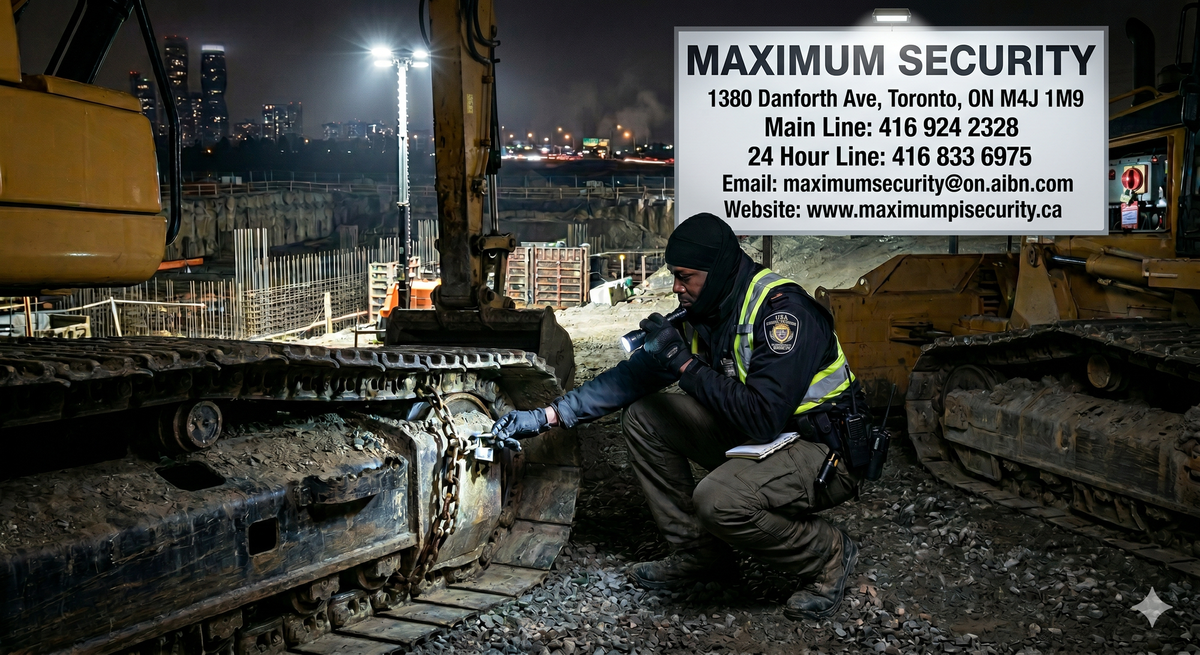
Securing heavy machinery and high-value earthmoving equipment across Mississauga—spanning extensive industrial developments near the logistics hubs of Gateway, rapid infrastructure projects along Hurontario Street, or commercial developments near the Pearson airport corridor—presents project developers with high-stakes asset protection challenges. As major distribution and transit networks expand along core thoroughfares like Highway 401, Highway 403, and Dixie Road, active construction compounds become attractive targets for highly sophisticated cargo theft syndicates operating throughout Peel Region. These criminal networks do not merely target hand tools; they possess the heavy logistics, flatbed transport vehicles, and specialized knowledge required to bypass ignition systems and liquidate multi-ton excavators, wheel loaders, and skid steers.
Relying on standard factory ignition keys, basic perimeter chain-link fencing, or unmonitored tracking tags leaves millions of dollars in equipment assets completely vulnerable. For a commercial contractor or infrastructure project superintendent, stopping these sophisticated operations requires implementing industrial-grade physical immobilization standards, engineering tight staging zones, and deploying professional on-site security personnel. Aligning your asset protection strategies with proven field metrics protects your operational capital and prevents severe project delays.
The Commercial Reality of Heavy Equipment and Cargo Theft in Peel Region
Heavy equipment theft in Mississauga is rarely an isolated crime of opportunity. Because Peel Region serves as Canada’s primary logistics and freight hub, organized cargo theft syndicates operate continuously throughout the municipality. These networks actively scout construction zones during peak operational hours, identifying high-value equipment assets, analyzing fence line vulnerabilities, and monitoring the schedules of site supervisors and sub-contractors.
Consensus Analysis: Standard Electronic Anti-Theft Keys vs. Physical Heavy-Duty Track Locks
Project managers often assume that modern heavy machinery equipped with digital master keys or electronic keypads is inherently secure against unauthorized transport.
The Verdict:
- Avoid This: Relying solely on factory-installed electronic keypads or digital ignition codes to secure yellow iron overnight. Organized cargo thieves utilize black-market programming bypass tools and master dealer keys that completely override electronic control units in under two minutes.
- Buy This: Mandate the exclusive installation of heavy-duty, mechanical track locks, hydraulic system lockouts, and case-hardened steering wheel bars across all high-value machinery assets at tool-drop. Physical, structural barriers force thieves to consume substantial time and create extreme noise trying to breach the equipment, completely neutralizing silent electronic bypass tactics.
Calculating the Financial Fallout of Machinery Losses
The economic damage of heavy machinery theft extends far past the initial purchase or replacement cost of a single piece of equipment. When a major asset—such as a 20-ton crawler excavator or a commercial-grade backhoe—is stolen overnight from a Mississauga development site, the primary contractor faces an immediate disruption to their critical path schedule.
If an excavation crew arrives at 6:30 AM to find their primary earthmoving assets missing, the entire grading, trenching, or foundation timeline grinds to an immediate halt. Because specialized machinery operators and trade laborers must be paid guaranteed daily wages under local trade agreements, a single day of machinery-induced downtime easily drains thousands of dollars in unrecoverable labor expenditures. Sourcing a comparable replacement rental machine can take days, further compounding schedule delays.
| Loss Factor | Unsecured Machinery Compound Breach | Fortified Security Guard Layout |
| Machinery Replacement Value (Deductible/Loss) | $85,000 - $180,000 (CAD) | $0.00 (Prevented Breach) |
| Skilled Operator & Trade Labor Downtime (3 Days) | $18,000 (CAD) | $0.00 (Uninterrupted Progress) |
| Replacement Rental Sourcing & Logistics | $6,500 (CAD) | $0.00 (No Interruption) |
| Commercial Builders' Risk Premium Escalation | 20% - 35% annual increase | $0.00 (Maintained Clean Record) |
| Total Estimated Financial Impact | $109,500 - $204,500+ (CAD) | $0.00 |
Furthermore, multiple high-value heavy equipment claims submited to your commercial insurance broker can cause annual builders' risk premiums to escalate or result in the complete cancellation of your equipment floater policies. If the resulting equipment delays cause you to miss strict project milestones, your business faces heavy liquidated damages clauses from project developers. Sourcing professional, proactive on-site guarding is mathematically superior to absorbing the severe operational and financial fallout of an unprotected asset compound.
Contractors looking to establish foundational security baselines across broad provincial frameworks should review our comprehensive 2026 construction site security guidelines for GTA contractors to verify code-compliant protection.
Engineering an Ironclad Heavy Machinery Protection Blueprint
Neutralizing sophisticated cargo theft networks operating across Mississauga requires an active, layered physical security layout that stops unauthorized transport attempts before thieves can breach your main assets.
1. Staging Circle Engineering and Physical Immobilization
Superintendents must abandon loose, linear equipment parking strategies. At the end of every operational shift, all heavy machinery must be maneuvered into a tight, defensive staging circle (commonly referred to as a "box-in configuration"). Position lower-value assets or heavy concrete barriers on the exterior line of the circle, blocking high-value, highly mobile equipment like skid steers and mini-excavators inside the center.
Lower all excavator booms, loader buckets, and scraper blades flat to the ground and engage all hydraulic lockout switches. For extreme high-value assets, wrap case-hardened manganese-alloy transport chains tightly through the drive sprockets and lock them directly to heavy concrete infrastructure or dead-weight anchor pads.
2. Implementing Master Battery Disconnect and Lockout Protocols
Experienced cargo thieves easily hotwire standard ignition switches. To prevent unauthorized engine start-ups, contractors must mandate that all operators engage internal master battery disconnect switches at the end of every shift. These switches cut all electrical current from the battery bank to the starter motor.
The master switch enclosure itself must be locked tightly using case-hardened, hidden-shackle puck locks that completely eliminate exposed shackle arms, neutralizing manual bolt cutters, pry bars, and sawing attempts. Project supervisors can review our regional guide on preventing overnight tool theft on East York construction sites for advanced physical lock standards and container fortification blueprints.
3. Deploying Dedicated Live Static Guarding
Sprawling infrastructure and logistics builds in Mississauga require a continuous, dedicated physical security presence to counter organized crime networks. A licensed, professional static security guard stationed on-site throughout overnight and weekend windows ensures your high-value assets remain under uninterrupted visual monitoring.
The guard manages gate access control, verifies incoming delivery manifests, and conducts regular physical perimeter checks to ensure fencing panels have not been cut or unbolted by scout teams. For developers seeking to evaluate alternative mobile check frameworks across residential and low-density parcels, studying our overview on hiring live guards vs. mobile patrols for Vaughan residential developments outlines critical deployment metrics.
Sourcing Verified Commercial Guarding Services in Peel Region
Acquiring external security guard coverage requires a realistic understanding of commercial agency pricing structures across Southern Ontario. Project procurement teams often confuse entry-level hourly guard wages with the final commercial invoice rate billed by a fully insured security business. In 2026, a compliant security firm must operate under the strict regulations of the Private Security and Investigative Services Act (PSISA), pricing contracts to cover substantial corporate infrastructure, including multi-million-dollar commercial general liability insurance, comprehensive WSIB clearings, vehicle fleet maintenance, and 24/7 centralized command centers.
For active commercial developments or industrial builds in Mississauga, contractors should budget for the following commercial agency bill rates:
- Static Overnight Foot Patrol Guard (Tier 1): Billed at $38.00 to $48.00 per hour (CAD). This involves a dedicated guard stationed continuously on your property for a full 10-to-12-hour shift, executing continuous physical perimeter patrols and maintaining a digital incident logbook.
- Premium Access Control Guard (Tier 2): Billed at $45.00 to $58.00 per hour (CAD). This involves a specialized guard managing heavy shipping gates, executing manifest audits, and enforcing site compliance during active delivery hours.
If your commercial infrastructure project or industrial asset yard along the Mississauga logistics corridor demands immediate, unyielding protection against organized cargo crime, establishing a professional line of defense is simple. Project superintendents can seamlessly connect with proven local operators to request a custom security quote from Maximum PI Security to deploy high-visibility assets, manage primary access gates, and eliminate liability vulnerabilities before they trigger severe operational delays.
Compliance and Liability Management under the PSISA
Every physical security deployment on a Mississauga project must operate cleanly within Ontario's legal and regulatory frameworks to protect the primary contractor from civil lawsuits and regulatory fines. Under the Private Security and Investigative Services Act, any individual performing property protection, overnight watch, or gate access control must hold an active Ontario Security Guard Licence.
Some general contractors attempt to circumvent this law by offering cash to off-duty laborers or night-shift operators to sit in a vehicle and watch the machinery overnight. This introduces massive financial and legal vulnerabilities. Unlicensed individuals lack formal training under the Trespass to Property Act (TPA). If an unlicensed individual engages in a physical altercation with a professional cargo thief and sustains an injury, your primary commercial general liability policy will likely be voided due to a breach of risk warranties. Your firm will face immediate workplace safety investigations, heavy provincial fines, and severe civil lawsuits. Sourcing security through a verified firm adhering to strict training baselines—such as those detailed in our guide on construction site security guard requirements in North York—is a fundamental risk-management step.
The "Reddit Defense": Nitty-Gritty Cargo Theft Answers
How do organized theft rings manage to move a 15-ton excavator out of a gated site without attracting attention?
Professional cargo theft networks do not drive stolen excavators down public streets. They utilize stolen commercial flatbed trucks or heavy roll-off trailers, pulling directly into your site gate during low-traffic windows between 1:00 AM and 4:00 AM. They wear high-visibility construction apparel and hard hats to mimic normal logistics workers. If your site lacks an active, live guard to challenge their access manifest, they can winch or drive an immobilized asset onto a trailer and clear your perimeter hoarding in under five minutes.
What should a security guard do if they discover a suspect transport truck idling near the main gate after hours?
If an overnight guard spots a commercial transport vehicle or a heavy flatbed idling near your perimeter fencing with no scheduled delivery manifest, the absolute protocol is immediate documentation and escalation. The guard must remain within a secure observation zone, capture high-resolution photos of the vehicle’s license plates, corporate branding, and DOT numbers using a mobile reporting application, and immediately alert their centralized dispatch desk. The dispatch desk will immediately contact the Peel Regional Police cargo theft unit to intercept the vehicle and check for scout activity.
Can we legally embed hidden GPS tracking devices inside our heavy machinery?
Yes. Installing multiple, redundant cellular and satellite-based GPS tracking units inside the chassis, engine compartments, or battery bays of all high-value machinery is an industry best practice across the GTA. However, you must ensure these devices utilize independent battery power supplies, as professional thieves immediately disconnect the machine’s main battery cables upon breaching the cabin. If an asset is stolen, hand the live tracking stream directly to local police divisions; never attempt to execute a private recovery operation against organized cargo rings.

Frequently Asked Questions
Are Mississauga construction sites facing elevated rates of catalytic converter theft?
Yes. Aside from total machinery theft, organized property crime rings target heavy work trucks and commercial vans to slice out catalytic converters using battery-powered reciprocating saws. To mitigate this specific exposure, ensure all site fleet vehicles are parked directly within the central, high-visibility staging zone illuminated by inward-facing LED lighting arrays.
What is the legal framework governing private security guards making a citizen's arrest under the TPA?
Under the Ontario Trespass to Property Act, a private security guard acting as an authorized representative of the property owner can execute a citizen's arrest if they find an individual committing an unlawful act on the premises. However, because cargo thieves are frequently armed with industrial tools and operate in groups, professional guard protocols strictly prioritize immediate law enforcement escalation over physical detention to protect site personnel from harm.
Should we utilize temporary concrete barriers to block our main access gates overnight?
Yes. Placing a interlocking heavy concrete block or parking a fully locked, immobilized heavy excavator directly across the interior line of your primary access gates is an excellent secondary physical defense. This strategy prevents cargo trucks or flatbeds from executing a quick breach and drive-out, forcing them to spend substantial time trying to clear the entry path.
About the Author
Jeff Calixte is an online exclusive content sell strategist with a deep background in tracking local asset protection data, analyzing Southern Ontario labor rates, and outlining real operational deployment structures across the Greater Toronto Area.
Sources
- Ontario Ministry of the Solicitor General - Private Security and Investigative Services Act Regulations
- Trespass to Property Act, R.S.O. 1990, c. T.21
- Peel Regional Police - Cargo Theft and Commercial Property Protection Advisories
Note
Commercial bill rates, guard wages, deployment conditions, and vendor availability can vary widely by province, municipality, season, and project scope. All pricing estimates, labor figures, and career examples in this guide are approximations based on current Ontario market data. Always confirm contract details, licensing compliance, and specific rate quotes directly with your chosen service provider or employer before finalizing any agreements.