Pre-Construction Site Fencing and Asset Protection in Downtown Toronto
Raw excavation, demolition, and hoarding phases face heavy municipal scrutiny and trespassing risks in Downtown Toronto. Learn the 2026 site fencing requirements and guard deployment metrics.
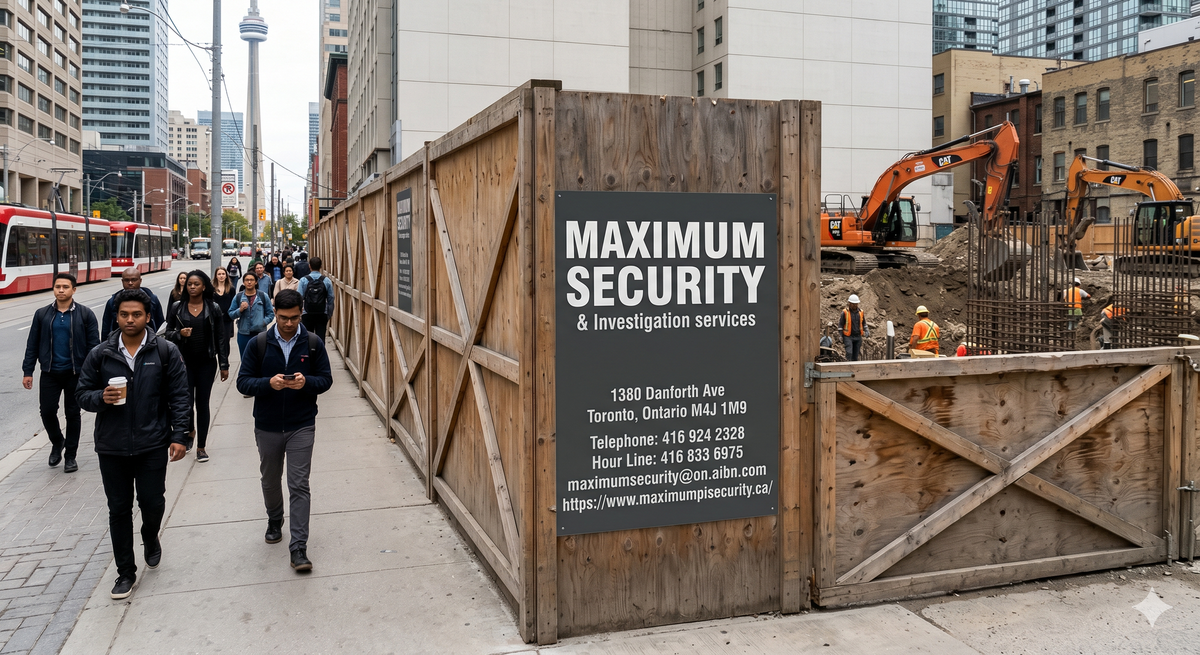
Initiating a major real estate development, commercial high-rise tower, or transit infrastructure project within Downtown Toronto’s dense urban core presents intense logistical and security challenges from day one. Long before structural steel rises or concrete trucks begin regular pours, the pre-construction phase—encompassing structural demolition, utility line isolation, clear-cutting, and deep-cut earth excavation—presents a wide array of physical liabilities. From the busy high-traffic corridors of the Financial District and Yonge-Dundas to expanding mixed-use sites across the West End and the Entertainment District, unsecured pre-construction parcels attract significant trespass risks, liability exposures, and strict municipal enforcement actions.
During these initial groundwork phases, project superintendents often make the mistake of treating perimeter security as a secondary concern, relying on lightweight, unreinforced temporary fencing lines or unmonitored gates. In a dense urban environment like Downtown Toronto, an unsecured boundary instantly attracts scrap-metal scavengers, urban explorers, and individuals seeking shelter in open excavation zones. Protecting your project’s financial capital and ensuring full compliance with municipal building codes requires implementing structural hoarding systems, establishing strict perimeter monitoring, and deploying professional on-site security personnel.
The Operational Pressures of Pre-Construction Sites in Downtown Toronto
The pre-construction phase is uniquely vulnerable because the physical landscape changes rapidly every day. As excavation crews dig deep foundations and heavy demolition equipment clears older masonry structures, the site lacks the natural security barriers provided by enclosed interior rooms or lockable storage vaults.
Consensus Analysis: Standard Temporary Chain-Link Panels vs. Solid Structural Wood Hoarding
When planning the initial site layout, development teams routinely debate whether to deploy standard, temporary interlocking steel fence panels or invest in solid, structural wood hoarding along public boundaries.
The Verdict:
- Avoid This: Relying on standard, lightweight six-foot temporary wire fence panels along high-traffic downtown sidewalks. These standard panels are easily tipped over by high winds, pulled apart by hand tools, or bypassed by intruders simply lifting the bases out of their loose metal stands.
- Buy This: Install fully compliant, heavy-duty eight-foot solid wooden hoarding panels bolted directly into structurally engineered ground posts or weighted concrete barriers. Solid wooden hoarding completely blocks public visibility, stops airborne debris, and provides a rigid physical barrier that prevents opportunistic intruders from accessing dangerous excavation zones.
Calculating the True Financial Fallout of Perimeter Failures
The economic consequences of a perimeter security failure during the demolition and excavation phases extend far beyond simple property damage. If an unauthorized individual breaches a weak fence line near a busy street like Queen Street West or Spadina Avenue to explore a deep excavation zone after hours, the developer faces severe, immediate liabilities.
Under the Ontario Occupant's Liability Act, a property developer holds an unyielding legal duty of care to ensure that their private premises are reasonably safe for anyone entering, including uninvited trespassers who may be injured by open hazards. If an intruder falls down an unprotected excavation shoring wall or suffers an injury from heavy staging equipment overnight, the primary contractor faces immediate investigations by the Ministry of Labour and local police divisions. The project is typically hit with immediate stop-work orders that completely freeze construction progress for days or weeks while thorough safety audits are executed.
| Perimeter Loss Factor | Unsecured Wire Fence Layout | Fortified Wood Hoarding & Guard Deployment |
|---|---|---|
| Municipal Property Code Violations & Fines | $5,000 - $15,000 (CAD) | $0.00 (Fully Compliant Site) |
| Ministry of Labour Stop-Work Delay Costs | $25,000 - $60,000+ (CAD) | $0.00 (Uninterrupted Progress) |
| Legal Defense & Civil Liability Insurance Claims | Variable ($10,000+ Deductibles) | $0.00 (No Incidents Recorded) |
| Demolition Crew Standby Expenses (2 Days) | $14,000 (CAD) | $0.00 (On-Schedule Operations) |
| Total Estimated Financial Impact | $44,000 - $99,000+ (CAD) | $0.00 |
Furthermore, while your project stands completely idle during a mandatory safety investigation, the developer remains stuck paying steep rental fees for specialized heavy machinery and structural shoring equipment. Specialized demolition and shoring crews must be paid contractually guaranteed standby wages, causing unrecoverable labor expenses to mount rapidly. Multiple safety claims submitted to your commercial insurance broker can also cause annual builders' risk premiums to spike significantly or result in the complete cancellation of your corporate liability coverage. Sourcing professional, proactive security guarding services is mathematically superior to absorbing the severe operational and financial fallout of an unprotected urban jobsite.
Contractors looking to establish foundational security baselines across broad provincial frameworks should review our comprehensive 2026 construction site security guidelines for GTA contractors to verify code-compliant protection.
Engineering an Ironclad Pre-Construction Asset Protection Plan
Mitigating liability risks on a dense downtown excavation yard requires an active, multi-layered security blueprint that eliminates vulnerabilities before the sun goes down.
1. Advanced Gate Engineering and Access Points
Urban pre-construction sites require strict containment at all primary access gates. All vehicle delivery gates along major streets must utilize flush-fit structural steel panels that leave zero gaps at the bottom, preventing intruders from crawling beneath the perimeter line. All gate hardware must face inward toward your private property to prevent outsiders from unscrewing or cutting through exterior hinges.
At the end of every daily demolition shift, all perimeter gates must be physically locked with heavy steel drop-bolts dropped into buried sleeve sockets. Ensure your storage yards are surrounded by inward-facing, high-efficiency LED floodlighting arrays to eliminate shadows and dark spots along public sidewalk corridors. Contractors can further fortify local tool storage setups by implementing the physical lock standards detailed in our specific regional blueprint on preventing overnight tool theft on East York construction sites.
2. Strategic Staging and Heavy Equipment Blockades
During early excavation phases, sites lack secure interior structures or concrete vaults to hold valuable equipment components. To protect high-value yellow iron assets from being compromised or tampered with by vandals, project supers must use heavy machinery as active physical blockades.
At the end of the day shift, park your heaviest excavators or front loaders directly across the interior line of your primary access gates, and lower all buckets, blades, and attachments flat to the ground. This physical configuration completely blocks vehicles or trailers from executing quick drive-in breaches, forcing intruders to spend significant time attempting to move heavy machinery without ignitions. For projects facing elevated rates of property damage or malicious disruption during earlier site clearing phases, combining these mechanical blockades with the deterrent frameworks in our guide on dealing with vandalism at Scarborough commercial build sites ensures your boundaries remain highly defended.
3. Deploying Full-Time Static Guarding and Gate Control
Dense urban projects near public transit hubs require an uninterrupted physical security presence to counter sophisticated property crime. Stationing a licensed, professional static security guard on-site throughout overnight and weekend windows ensures your raw excavation compound remains under continuous visual monitoring.
The guard manages site access control, verifies incoming delivery manifests, and conducts regular physical perimeter inspections to ensure hoarding panels have not been compromised or tagged by vandals. For project teams looking to evaluate alternative mobile security frameworks or randomized vehicle check models across lower-risk suburban developments, studying our detailed analysis on hiring live guards vs. mobile patrols for Vaughan residential developments outlines critical deployment and cost metrics.
Structuring the 2026 Sourcing Budget for Compliant Protection
Acquiring professional security guard coverage for high-density downtown builds requires a realistic alignment with current Southern Ontario commercial pricing. General contractors often make the mistake of evaluating security proposals based on basic entry-level guard wages, completely overlooking the substantial corporate infrastructure required to operate a legitimate, fully insured security guard business. In the 2026 Ontario market, a compliant security agency must operate under the strict guidelines of the Private Security and Investigative Services Act (PSISA), pricing contracts to cover extensive corporate overhead, including multi-million-dollar commercial general liability insurance, comprehensive WSIB clearings, vehicle fleet maintenance, and 24/7 centralized command centers.
For high-density commercial or residential projects in Downtown Toronto, developers should budget for the following commercial agency bill rates:
Commercial Security Sourcing Rates (Toronto Urban Core)
| Service Classification | Required Guard Qualifications | Commercial Hourly Client Bill Rate (CAD) | Intended Project Application |
|---|---|---|---|
| Basic Static Night Guard (Tier 1) | PSISA Licensed, First Aid Certified, WHMIS Compliant, basic digital logs. | $38.00 - $48.00 / hr | Contained infill projects, small commercial renovations, and basic material yards. |
| Premium Access Control Specialist (Tier 2) | PSISA Licensed, OSHA Trained, Working at Heights Certified, manifest auditing experience. | $45.00 - $58.00 / hr | High-rise residential towers, heavy transit infrastructure, and high-traffic shipping gates. |
| Randomized Mobile Vehicle Patrol (Tier 3) | Fully equipped GPS-tracked patrol vehicle, supervisor-level officer, rapid response capability. | $65.00 - $90.00 / hr (or $45 - $75 per individual site check) | Low-risk vacant land holdings, unstaffed material storage lots, and multi-site civil roadwork. |
Hiring an organization that quotes rates significantly below these commercial baselines—such as $22.00 to $25.00 per hour—is a direct indication that the provider is cutting critical compliance corners, leaving your business exposed to massive legal vulnerabilities. Understanding the foundational legal frameworks outlined in construction site security guard requirements in North York can protect your business from these severe compliance failures.
If your active downtown project, excavation compound, or high-rise development along a high-traffic urban corridor demands immediate, unyielding protection against overnight liabilities, establishing professional protection is straightforward. Project superintendents and property developers can easily connect with verified field operators to request a custom security quote from Maximum PI Security to deploy certified personnel, manage primary access gates, and secure valuable capital assets against overnight liabilities.
Compliance, Liability, and the Toronto Municipal Code
Deploying any form of physical security or protective barrier on a Downtown Toronto build site requires strict adherence to provincial and municipal regulations to prevent the primary contractor from facing heavy fines or civil liability claims. Under City of Toronto Municipal Code Chapter 363, developers must install specific overhead protection and solid hoarding fencing whenever construction or demolition work occurs adjacent to a public sidewalk or public right-of-way.
Furthermore, under the Private Security and Investigative Services Act, every single individual performing security duties, access control, or overnight watch functions must hold an active Ontario Security Guard Licence card. Some general contractors attempt to bypass this requirement by offering cash to an unlicensed worker or night-shift operator to sleep in a vehicle on-site overnight. This practice introduces massive financial and legal vulnerabilities. Unlicensed individuals lack the legal training required to manage trespassers properly under the Trespass to Property Act (TPA). If an unlicensed worker engages in a physical altercation with an intruder and sustains an injury, your commercial liability insurance provider will likely invalidate your entire policy. Sourcing security through a verified firm adhering to strict training baselines—such as those detailed in our guide on protecting heavy machinery from cargo theft in Mississauga construction zones—is a fundamental risk-management step.
Nitty-Gritty Pre-Construction Security Realities
Are downtown security guards legally authorized to remove trespassers from an open excavation site?
Yes. Under the Ontario Trespass to Property Act, a licensed security guard acts as an official representative of the property owner. This status gives them the full legal power to command unauthorized individuals to leave the premises immediately, deny entry to visitors without identification, and detain individuals caught in the act of committing an indictable offense (such as mischief or breaking and entering). However, because open excavation zones present immediate physical hazards and intruders may be under the influence, professional guard protocols strictly prioritize immediate verbal commands and rapid coordination with the Toronto Police Service over physical confrontation.
What should a project superintendent do if city inspectors issue a notice of non-compliance for sidewalk hoarding?
If a municipal inspector issues a safety notice regarding your perimeter hoarding or sidewalk protection, the superintendent must document the specific deficiencies, notify their security provider to adjust patrol rotations around the affected zone, and execute structural remediation within 24 hours. Leaving non-compliant fencing active along a busy downtown sidewalk exposes your firm to heavy daily fines, immediate stop-work orders, and massive civil liability if a member of the public is injured by a loose component.
Can we legally install barbed wire along the top of our wooden hoarding panels in Downtown Toronto?
No. Under Toronto municipal property standards bylaws, installing barbed wire, razor wire, or sharp physical deterrents along temporary construction hoarding or fencing adjacent to public sidewalks is strictly prohibited due to public safety hazards. Using illegal deterrents exposes the primary contractor to immediate municipal prosecution and total civil liability if a passerby or worker is injured by the wire. Stick to legal, highly effective alternatives like eight-foot solid wooden hoarding painted with anti-graffiti coatings and supported by professional on-site guarding.

Frequently Asked Questions
What are the primary entry threats faced by downtown excavation yards?
Field records show that downtown excavation sites face distinct entry threats, primarily from scrap-metal scavengers looking for discarded copper plumbing lines, urban explorers attempting to scale deep foundation walls for photography, and individuals seeking shelter in unlit staging zones during extreme weather conditions.
How do we protect bulk fuel tanks staged on open downtown jobsites?
To secure mobile fuel tanks and diesel trailers overnight, superintendents must install high-security kingpin locks to prevent unauthorized hitching by suspect vehicles. Furthermore, wrap case-hardened manganese-alloy transport chains tightly through the trailer wheels and lock the fuel distribution valves using heavy steel lockout caps to prevent malicious fuel siphoning or environmental spills. For projects requiring heavy equipment tracking and physical perimeter guarding, reviewing specialized overviews like protecting heavy excavators and machinery from theft in Vaughan is an essential step for any procurement team.
Should we use wireless motion-sensor cameras during the raw excavation phase?
Wireless, battery-powered site cameras equipped with integrated infrared night vision can serve as an effective secondary layer of defense, provided they are tied to a professional monitoring station that handles immediate human verification. Standalone sirens that ring without an active guard response mechanism are generally ignored in dense urban environments and provide minimal real deterrence against experienced intruders. For linear infrastructure or un-fenced roadside projects requiring specialized mobile security protocols, checking the metrics in overnight heavy equipment security for roadwork crews in Mississauga provides exceptional context for structuring protective frameworks.
About the Author
Jeff Calixte is an online exclusive content sell strategist with a deep background in tracking local asset protection data, analyzing Southern Ontario labor rates, and outlining real operational deployment structures across the Greater Toronto Area.
Sources
- Ontario Ministry of the Solicitor General - Private Security and Investigative Services Act Regulations
- Trespass to Property Act, R.S.O. 1990, c. T.21
- City of Toronto Municipal Code Chapter 363 - Building Construction and Demolition Standards
Note
Commercial bill rates, guard wages, deployment conditions, and vendor availability can vary widely by province, municipality, season, and project scope. All pricing estimates, labor figures, and career examples in this guide are approximations based on current Ontario market data. Always confirm contract details, licensing compliance, and specific rate quotes directly with your chosen service provider or employer before finalizing any agreements.