Managing Short-Term Rental and Visitor Access Control in Etobicoke
The explosion of unauthorized short-term rentals along the Humber Bay Shores and Queensway corridors is severely compromising building security. Discover the strict concierge verification protocols, digital access controls, and enforcement strategies required to lock down Etobicoke condominiums.
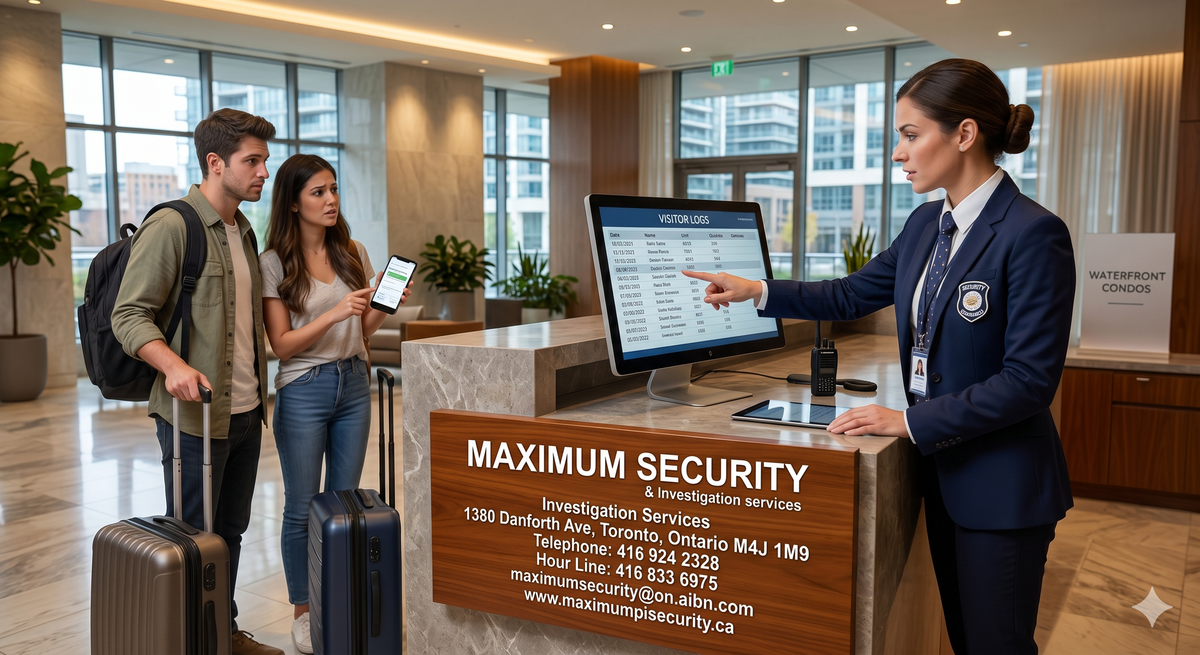
High-density condominiums stretching across the Humber Bay Shores waterfront and the rapidly developing Queensway corridor in Etobicoke are facing a relentless influx of transient traffic. Buildings structurally designed to house long-term residential communities have been covertly transformed into high-turnover, unstaffed hotels by unit owners bypassing municipal short-term rental bylaws. When weekend partygoers, out-of-town tourists, and unverified guests flood a building, they bring a massive surge in property damage, noise complaints, and severe structural liabilities.
Property managers and condo boards are constantly battling to regain control of their own lobbies. Relying on passive key fob entry systems and unmonitored intercoms provides absolutely no defense against organized rental operators who simply leave lockboxes attached to municipal fences outside the building perimeter. Once these transient guests obtain a cloned fob, they have unrestricted access to residential hallways, underground parking garages, and luxury amenities. Establishing a hard perimeter requires a structural overhaul of how visitor traffic is processed, relying heavily on trained human verification. To understand the foundational architecture required to manage these complex residential ecosystems, boards must review the Condominium Concierge Security Management: The GTA Board Guide to align their operational mandates with professional security deployment.
The operational reality in Etobicoke is that these illicit rentals directly compromise the safety of permanent residents. Strangers wandering the hallways during the late-night hours, completely unfamiliar with building fire protocols or emergency exits, create extreme risk profiles. Stopping this illicit flow requires the deployment of aggressive front desk access control, real-time digital auditing, and a security team legally authorized to turn away unverified individuals at the property line.
The Illicit Lockbox and Tailgating Vulnerability
The primary method short-term rental operators use to bypass building security is the exterior lockbox. Owners will attach combination lockboxes to public bike racks or street signs near the Park Lawn Road transit hubs, containing a functional building fob and unit key. The "guest" retrieves the fob, walks into the lobby, and completely bypasses the concierge desk by blending in with the regular resident commuter traffic.
If a building utilizes an unstaffed lobby or an untrained administrative attendant, this covert entry goes completely unchallenged. The transient guests then invite additional unregistered individuals into the building by tailgating behind legitimate residents or propping open secure side doors. This exact vulnerability highlights the critical need for strict, localized perimeter enforcement, a strategy detailed extensively in our breakdown of Front Desk Security Concierge Solutions for Etobicoke High-Rises.
The Consensus Verdict: Field data consistently reveals that properties allowing self-serve lockboxes and lacking mandatory physical ID checks experience a 75% higher volume of unauthorized short-term rental traffic. Condo boards must immediately deploy tactical guards to physically remove exterior lockboxes from the property footprint and enforce a zero-tolerance, mandatory government ID verification process for every single non-resident entering the lobby.
Enforcing Mandatory Digital Verification
To eliminate the phantom guest problem, the concierge desk must transition into an absolute logistical choke point. The condo board must mandate that residents pre-register all expected visitors through a centralized digital property management application. When an individual approaches the concierge desk claiming to be a "guest of unit 804," the guard immediately cross-references the digital ledger.
If the visitor is not pre-registered, the guard attempts to contact the resident via the intercom. If the resident does not answer to physically vouch for the individual, entry is unconditionally denied. There are no exceptions for "lost phones" or "sleeping hosts." The guard must also demand physical, government-issued identification to match the registered name. By removing the anonymity of the visitor, the security team instantly deters individuals looking to exploit the building for unauthorized parties.
Estimated Etobicoke Concierge Access Control Tiers in CAD
| Guard Classification | Operational Enforcement Focus | Estimated Hourly Bill Rate (CAD) | Principal Liability Target |
| Standard Access Concierge | Digital visitor logging, intercom verification, ID checks | $24.00 - $28.00 | Casual tailgating, unverified deliveries |
| Rental Enforcement Specialist | Lockbox auditing, luggage tracking, tenant cross-referencing | $28.00 - $32.00 | Illicit short-term rentals, party organizers |
| Tactical Roving Guard | Floor sweeps, amenity lockdown, noise complaint intervention | $30.00 - $35.00 | Unauthorized gatherings, property vandalism |
Mitigating Noise Complaints and Amenity Abuse
Transient guests utilizing short-term rentals rarely respect the operational hours of building amenities. They frequently attempt to access rooftop patios, fitness centers, and pool areas late at night, bringing glass containers, alcohol, and excessive noise. When permanent residents complain, an untrained staff member is often intimidated and fails to shut down the gathering, leading to escalating conflicts.
A licensed security guard possesses the tactical training and legal authority to intervene immediately. Operating under the building's specific bylaws, the guard will dispatch themselves to the amenity floor, confront the unauthorized group, and demand proof of residency. If the group cannot provide valid verification, the guard legally orders them to vacate the common area and escorts them back to their unit or off the property entirely. This active intervention stops property damage before it occurs and insulates the condo board from legal claims regarding failure to enforce building rules.
Advanced Strategies for Eliminating Illicit Short-Term Rentals
Securing a high-density Etobicoke condominium against determined, profit-driven short-term rental operators requires more than a simple lobby sign-in sheet. These operators are sophisticated, utilizing fake names, rotating unit listings, and coaching their guests on exactly what to say to bypass the concierge. This section outlines the aggressive, deeply technical operational protocols required to completely dismantle illicit rental networks operating within your building.
Tracking the "Luggage Signature"
One of the most effective methods for identifying an unauthorized short-term renter is visual profiling at the main entrance. Permanent residents returning from work or running errands do not typically enter the lobby hauling three oversized suitcases and asking for directions to the elevator bank.
Security guards must be trained to recognize this "luggage signature." When a guard observes an unrecognized individual entering the vestibule with substantial baggage, they must immediately intercept them. The guard politely but firmly requests their resident fob and asks to confirm their unit number. If the individual fumbles, attempts to call their "host" for instructions, or claims they are just "visiting a friend for the weekend," the guard immediately transitions to a strict verification protocol. This proactive interception prevents the transient guest from ever reaching the elevator core, a tactic heavily utilized in managing high-volume urban traffic as seen in Downtown Toronto Condo Security: Managing Visitor Access Control Safely.
Executing Targeted Lockbox Sweeps
The physical infrastructure of an illicit rental operation relies on key exchange. Because operators rarely live on-site, they must leave fobs accessible to their guests. They frequently chain large, heavy-duty combination lockboxes to stairwell railings, exterior gas meters, or municipal fencing just beyond the property line.
A dedicated security team must conduct daily exterior perimeter sweeps explicitly to hunt for these devices. When a lockbox is discovered attached to condominium property, the guard documents the location, photographs the device, and immediately cuts it off using heavy bolt cutters. The confiscated lockbox and the cloned fob inside are then turned over to the property manager. By repeatedly destroying the operator's key-exchange mechanism, the condo board makes it financially and logistically impossible for them to continue running the unit as a hotel.
Auditing Electronic Access Control Logs
Illicit operators frequently clone physical key fobs, providing multiple unauthorized copies to cleaning crews and rotating guests. A major vulnerability occurs when an operator holds a single authorized resident fob, but the building's digital access control system registers that specific fob swiping into the lobby entrance, the parking garage, and the fitness center simultaneously.
Security directors must routinely audit the backend digital access logs. By running advanced reports, guards can identify "fob anomalies"—instances where a single credential is being used an impossible number of times per day, or swiping at entry points that do not align with normal residential commuting patterns. Once a compromised fob is identified, the security team instantly deactivates it in the system. When the unauthorized guest attempts to use the dead fob later that night, they are trapped in the vestibule and forced to interact directly with the concierge, exposing the illicit operation.
Intercepting Third-Party Cleaning Services
Short-term rentals require constant turnover. Operators must hire third-party cleaning crews to quickly flip the unit between a Sunday checkout and a Monday check-in. These cleaning crews often arrive with industrial equipment, block service elevators, and demand entry, claiming they are authorized by the unit owner.
The security concierge must treat unvetted cleaning crews as a massive security breach. The board must enforce a bylaw stating that no commercial cleaners are permitted access unless the resident is physically present to escort them, or the resident has submitted a formal, signed authorization form to the management office 48 hours in advance. When the concierge denies entry to the cleaning crew, the operator's ability to rent the unit the following day is completely destroyed. This aggressive logistical denial starves the illicit operation of its necessary support structure.
Navigating the Legal Framework of Denying Entry
Condo boards frequently express concern over the legal liability of a security guard physically turning away an individual who claims to have rented a unit. In Ontario, under the Trespass to Property Act, the condominium corporation—represented by its licensed security guards—has the absolute legal right to control access to all common elements (lobbies, hallways, amenities).
If a building's declaration and bylaws explicitly prohibit short-term rentals (such as leases under six months), an individual who has rented a unit via an app for the weekend is not a legally recognized tenant. Therefore, they have no legal right to access the common areas. The security guard acts with full legal authority when they deny the individual entry to the lobby. The individual's financial dispute is strictly with the illicit operator who scammed them, not with the condo board enforcing its legal perimeter. This precise legal positioning protects the property management team from civil liability while firmly removing the threat.
If your Etobicoke condominium is overwhelmed by unauthorized transient guests, constant noise complaints, and compromised perimeter security, request a custom security quote from Maximum PI Security to deploy a specialized access control concierge team today.

Frequently Asked Questions
Can a security guard legally confiscate a lockbox attached to the condo fence?
Yes. If a lockbox is physically attached to any property owned by the condominium corporation (such as perimeter fencing, stairwell railings, or utility meters), it is considered unauthorized dumping or an immediate security hazard. A licensed security guard, acting under the direction of the property manager, possesses the legal authority to cut the lockbox and remove it from the premises to protect the building's access control integrity.
What should a concierge do if a short-term rental guest becomes aggressive when denied entry?
If a transient guest becomes verbally abusive or combative after being denied entry, the concierge is trained to prioritize de-escalation and personal safety. The guard maintains a physical barrier behind the desk, firmly repeats the building bylaws, and instructs the individual to contact the person who rented them the unit. If the individual refuses to leave the vestibule, the guard immediately contacts the Toronto Police Service to execute a formal trespass removal.
How do security guards handle noise complaints from suspected short-term rental units?
When a guard responds to a severe noise complaint from a suspected short-term rental unit, they conduct a tactical floor sweep to assess the volume and number of occupants. The guard knocks on the door and demands the occupants lower the volume while simultaneously requesting government ID to verify residency. If the occupants cannot prove they are registered residents, the guard documents the bylaw infraction, orders the unauthorized gathering to disperse, and submits a detailed digital incident report to the property manager for immediate legal action against the unit owner.
A licensed condominium security guard effectively stops unauthorized short-term rentals by enforcing mandatory government ID checks at the front desk, physically auditing the exterior perimeter to destroy illicit key-exchange lockboxes, and aggressively cross-referencing visitor requests with digital pre-registration logs. Operating under the Ontario Trespass to Property Act, these strict access control protocols ensure that only legally verified residents and their authorized guests can access the building's secure residential corridors.
About the Author
Jeff Calixte is an online exclusive content sell strategist with a deep background in tracking local asset protection data, analyzing Southern Ontario labor rates, and outlining real operational deployment structures across the Greater Toronto Area.
Sources
- Ontario Trespass to Property Act, R.S.O. 1990
- Condominium Authority of Ontario - Short-Term Rental Regulations
Note
Commercial bill rates, guard wages, deployment conditions, and vendor availability can vary widely by province, municipality, season, and project scope. All pricing estimates, labor figures, and career examples in this guide are approximations based on current Ontario market data. Always confirm contract details, licensing compliance, and specific rate quotes directly with your chosen service provider or employer before finalizing any agreements.